Why Your AC Is Freezing Up (And What Actually Fixes It)
Vardan Hovhannisyan
Co-Founder

Date & Time
You walk outside and there it is: a sheet of ice wrapped around the copper line running into your AC, or a solid slab of frost coating the indoor coil. Meanwhile the house keeps getting warmer, not cooler. It feels backward, an air conditioner turning into an ice machine instead of doing its job, but it happens constantly in Palm Beach County, and it almost always traces back to one of four specific problems.
Here is how to read what you are looking at, what to do in the next ten minutes, and when this is a simple fix versus a same-day call to a licensed technician.
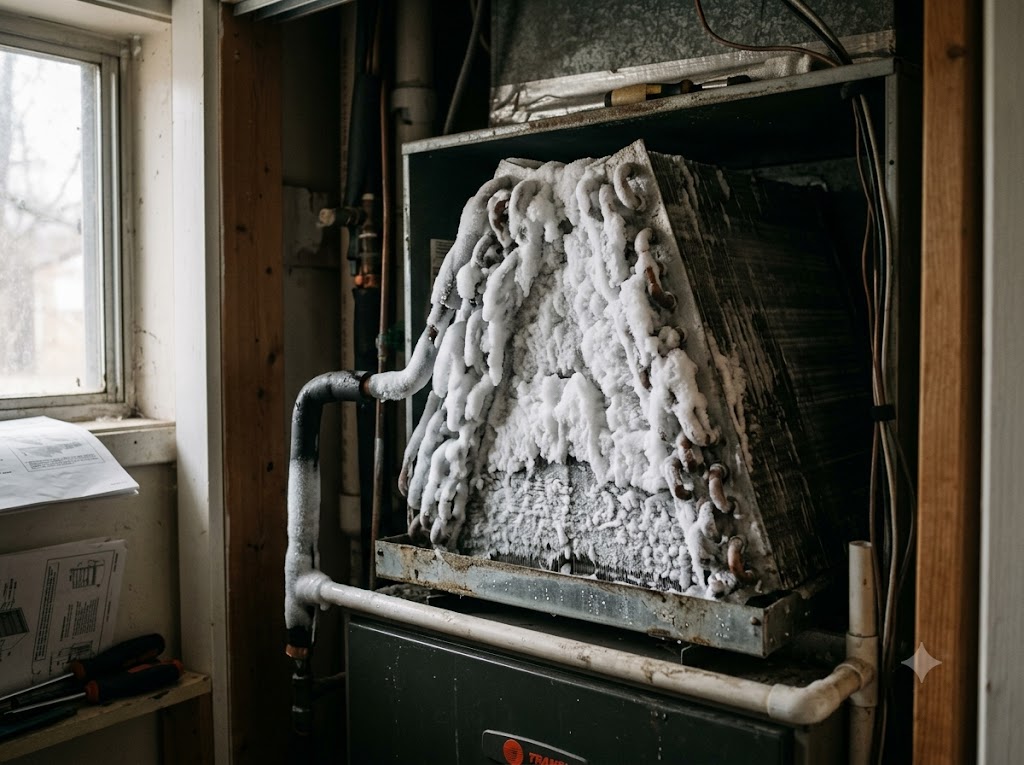
A frozen evaporator coil is the most common version of this problem, and the fix depends on why the ice formed in the first place.
What "frozen" actually looks like, and why the location of the ice matters
Not every frozen AC looks the same, and where the ice forms narrows down the cause before a technician ever shows up.
Ice on the thin copper refrigerant line running between the indoor and outdoor units usually points to a refrigerant problem. A solid coat of frost across the entire indoor coil, the finned metal box near your air handler, usually points to an airflow problem. Ice that has spread onto the outdoor unit as well means the system has been running frozen for a while and needs a full shutdown, not a quick patch.
The four real causes, in the order Simple Action technicians see them across Palm Beach County
1. Restricted airflow
This is the most common cause by a wide margin. A dirty air filter, closed supply vents, furniture blocking a return air grille, or a collapsed section of ductwork all choke off the warm indoor air the coil needs to stay above freezing. According to the U.S. Department of Energy's guidance on air conditioner maintenance, a dirty filter reduces airflow enough to let dirt bypass it and accumulate directly on the evaporator coil, and the agency recommends checking filters monthly during cooling season if the system runs constantly, which describes most homes in this county from roughly May through October.
2. Low refrigerant from a leak
Refrigerant does not get "used up" the way fuel does. If a system is low, refrigerant is escaping somewhere, almost always through a small leak in the coil or line set. Less refrigerant means the remaining charge expands more than it should inside the coil, which drops the coil's surface temperature below freezing even though the rest of the system looks fine. Diagnosing and repairing a refrigerant leak, and recovering or adding refrigerant, legally requires an EPA Section 608 certified technician. The EPA's Section 608 certification requirements exist because refrigerant handling can violate the sealed refrigerant circuit and release the substance into the atmosphere, which is why this is not a homeowner repair.
3. A dirty or bent evaporator coil
Dust, pet hair, and general household grime settle onto the coil fins over time, insulating the coil the same way a dirty filter does. Bent or crushed fins from an aggressive cleaning attempt or a rough install cause the same problem by blocking airflow across specific sections of the coil.
4. A failing blower motor or fan
The blower motor pushes air across the coil. If it is weak, running at the wrong speed, or has failed outright, the coil gets no airflow at all and ices over within an hour or two, even with a clean filter and a full refrigerant charge.
Why this happens more often in Palm Beach County than in cooler climates
The cooling season here stretches nine months or longer, and through the peak of summer many systems run close to continuously to keep up with the heat. That kind of runtime multiplies every cause listed above. Filters load up with dust faster because the blower is moving far more air over a given month than it would in a shorter cooling season. Coils collect grime faster for the same reason. And a small refrigerant leak that would take a full season to show symptoms somewhere with six cooling months has far more running hours per week to turn into visible ice down here. None of this means Florida systems are built differently. It means the maintenance schedule that works in a milder climate falls short here, and small problems get discovered as ice instead of as a slight drop in performance.
What to do the moment you see ice
Turn the thermostat off completely, not just up. Leaving it in cooling mode keeps trying to push the system through a problem it cannot fix on its own, and that makes the ice worse. Switch the fan setting to "on" instead of "auto" so air keeps moving across the coil and speeds up the thaw. Set a towel or shallow pan near the air handler to catch water as the ice melts, since a fully iced coil can produce a surprising amount of runoff. Then wait. A light coating on the line can clear in under an hour; a fully frosted coil can take three hours or more, and a heavily iced system is often best left off overnight.
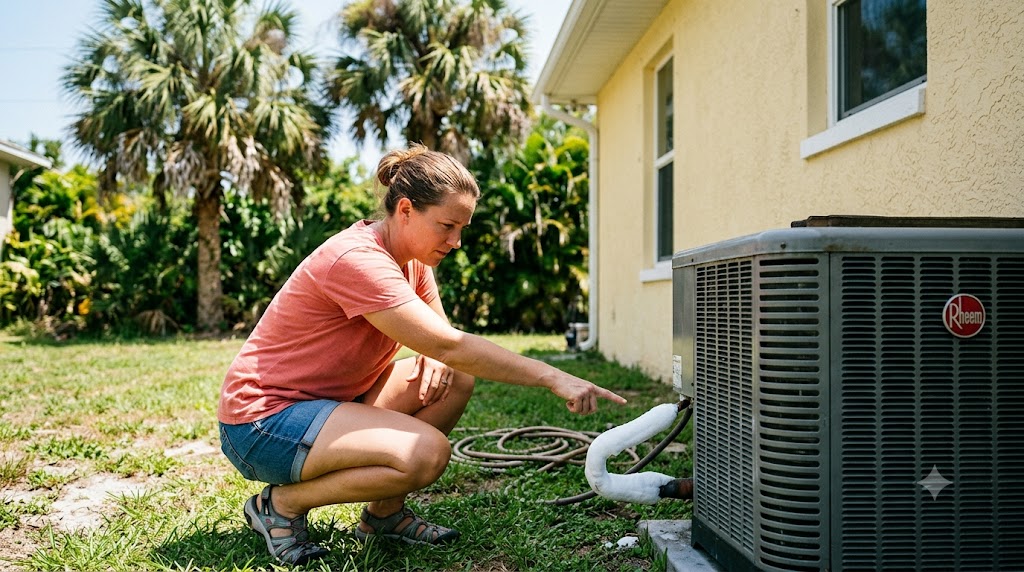
Shutting the system off at the first sign of ice, rather than turning the thermostat down further, is the single biggest factor in how fast it recovers.
What not to do while the coil is frozen
Do not keep lowering the thermostat expecting the system to catch up once it thaws. That instinct makes sense, but it keeps the compressor working against a blocked coil and can shorten its life. Do not chip, scrape, or pry at the ice. Evaporator coil fins are thin aluminum, and a screwdriver or knife can puncture them in seconds, turning a filter problem into a refrigerant leak. Do not ignore a hissing or bubbling sound coming from the unit. That sound often means refrigerant escaping under pressure, and it means turn the system off and call a licensed technician rather than waiting to see if the ice goes away on its own.
When it is a simple fix and when it is time to call today
If this is the first time it has happened, the filter is visibly gray or clogged, and the ice is limited to the line or the front edge of the coil, replacing the filter and letting the system sit off for a few hours resolves it for most homeowners. Change the filter, confirm every supply vent in the house is open, and give it time before restarting.
Call a licensed technician the same day if the ice keeps coming back after a filter change, if it covers the entire indoor coil or has spread to the outdoor unit, if you hear hissing, or if the house was already blowing warm air before you noticed the ice. Those signs point to a refrigerant leak, a coil problem, or a failing blower motor, none of which get better on their own and all of which need diagnostic tools a homeowner does not have on hand.
How to keep it from happening again
Most repeat freeze-ups trace back to a maintenance gap rather than bad luck. Set a recurring reminder to check the filter monthly during cooling season and swap it as soon as it looks gray, not once it is visibly packed with dust. Keep every supply vent open, even in rooms you rarely use, since closing vents to "save energy" is one of the most common causes Simple Action technicians find on service calls. Clear leaves, mulch, and yard debris at least two feet back from the outdoor unit so it can breathe. And book a seasonal tune-up before the heaviest part of summer. A technician checks refrigerant charge, cleans the coil, and inspects the blower before any of it becomes ice on your line, which is the entire idea behind Simple Action's recommended AC service schedule for Florida homes and the AC maintenance and tune-up service built around it.
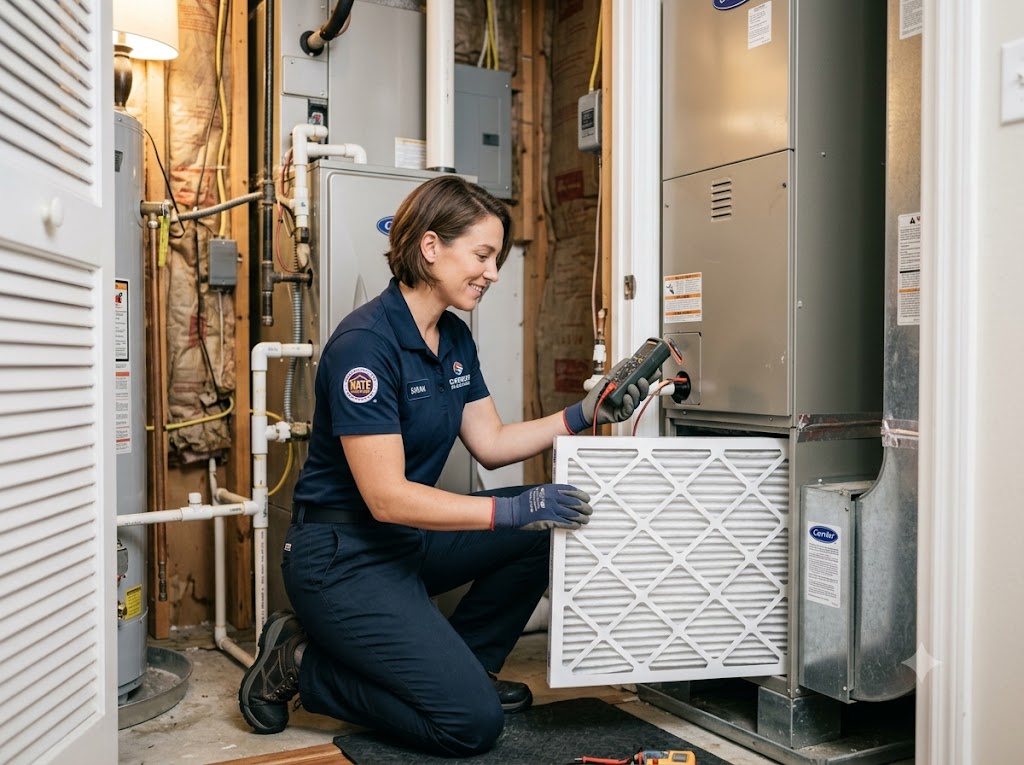
A seasonal tune-up catches a dirty coil or a slow refrigerant leak months before either one turns into ice.
If your AC is frozen right now and you have already switched it off, that is the right first step. If the ice keeps returning after a clean filter and a few hours off, or if the system was underperforming before this started, Simple Action offers 24/7 emergency service across Palm Beach County, backed by an upfront pricing promise, a narrow on-time arrival window, and a one-year labor warranty on the repair. One call, one visit, one honest answer about what is actually wrong. See our full AC repair service or find your city on the Palm Beach County service area page.
Frequently asked questions
Can I run my AC while it is frozen?
No. Running the system in cooling mode while the coil is iced pushes the compressor to work against blocked airflow, which can shorten its life or cause damage beyond the original problem. Switch the thermostat off and the fan to on until the ice fully clears.
How long does it take a frozen AC to fully thaw?
Light ice on the refrigerant line can clear in under an hour with the fan running. A fully frosted indoor coil typically takes one to three hours. A heavily iced system, especially one that has been running frozen for a while, is often best left off overnight before restarting.
Can low refrigerant cause an AC to freeze up?
Yes. Low refrigerant is one of the four most common causes. Because refrigerant does not deplete on its own, a low charge almost always means a leak somewhere in the coil or line set, and diagnosing that leak requires an EPA Section 608 certified technician.
Why does my AC only freeze up at night or on the coldest thermostat setting?
Lower nighttime temperatures and aggressive thermostat settings both push the coil closer to its freezing point, so a system with a marginal airflow or refrigerant issue that runs fine during the day can tip over into freezing once conditions get colder. It is a sign the underlying problem is already present, just not severe enough yet to show up under normal conditions.
Will a frozen coil damage the compressor?
It can, if the system keeps running while frozen. A blocked, iced coil can allow liquid refrigerant to reach the compressor instead of the vapor it is designed to handle, and compressors are not built to compress liquid. Shutting the system off at the first sign of ice is the simplest way to prevent that damage.