AC Repair Scams in Palm Beach and How To Avoid Them
Vardan Hovhannisyan
Co-Founder

Date & Time
It is 92 degrees outside, the house is climbing past 85, and the technician standing in your driveway just told you the whole system needs to go. Your kids are hot. You are sweating. He needs a decision now. This is the exact moment Palm Beach County homeowners lose thousands of dollars to repairs they never needed, because heat creates panic and panic skips the questions a calm person would ask.
Most AC companies here do honest work. A small number count on the heat doing their selling for them. This guide shows you the scams that show up most often in South Florida, the words that should make you slow down, and the simple checks that protect you before anyone touches your equipment.
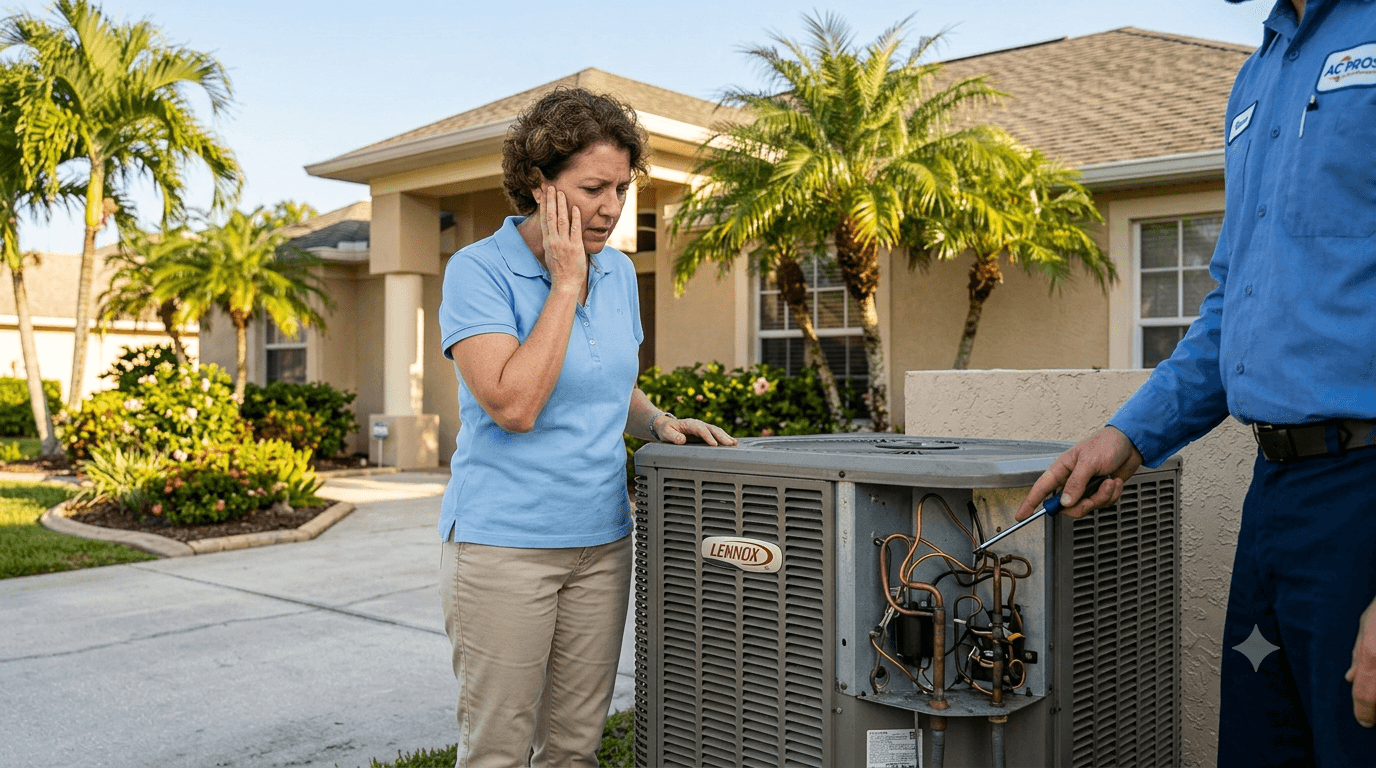
Heat and urgency are the tools every AC scam relies on.
The refrigerant recharge scam, and why it keeps working
This is the most common AC scam in Florida, and it works because almost no homeowner knows how refrigerant actually behaves. Your air conditioner does not burn refrigerant the way a car burns gas. It circulates the same charge through a sealed loop, year after year. A healthy system never needs a "top off." So when a technician tells you it is time for your annual refrigerant refill, that sentence alone is the tell.
If your refrigerant is genuinely low, you have a leak. Full stop. The honest move is to find the leak, repair it, and verify the repair before adding any refrigerant back. That is also how the federal rules are written. The U.S. Environmental Protection Agency frames refrigerant management around finding and repairing leaks and running verification tests after the repair, not refilling a system on a schedule. A tech who pumps in more refrigerant and walks away has fixed nothing. The leak is still there, the new charge bleeds out, and you get a call to come back and pay again.
South Florida adds its own twist. Salt air off the coast eats at coils faster than inland air does, so real leaks do happen here more often, especially on systems within a mile or two of the water. A dishonest tech uses that real risk as cover. He points at a corroded coil, says the system is shot, and sells you a recharge today and a full replacement next week. Ask him to show you the leak. Ask him to repair it. Then ask him to weigh the refrigerant going in.
Red-flag phrases that should make you stop
Scams sound urgent and vague at the same time. Honest diagnoses sound specific and calm. Listen for these lines:
"You are due for your yearly refrigerant refill." A sealed system does not need scheduled refrigerant. This is the single biggest giveaway.
"The whole system needs to be replaced, and I can start today." A real replace-versus-repair call comes with a written diagnosis, not a same-hour ultimatum delivered in your driveway.
"This price is only good if you sign right now." Pressure on the clock exists to stop you from getting a second opinion.
"Just pay me in cash, or make the check out to me." A legitimate company takes payment in the company name and gives you an itemized invoice. A push toward cash or a personal check is a classic recharge-scam signal.
"Your coil is full of mold, you need this add-on now." Indoor air quality products have a place, but a panic upsell during an unrelated repair is a sales tactic, not a diagnosis.
None of these phrases prove fraud on their own. Together, with a clock running and no paperwork in sight, they paint a clear picture.
What an honest AC technician does instead
Knowing what good looks like makes the bad obvious. A trustworthy tech in Palm Beach County works in a predictable order, and slows down when you ask questions rather than speeding up.
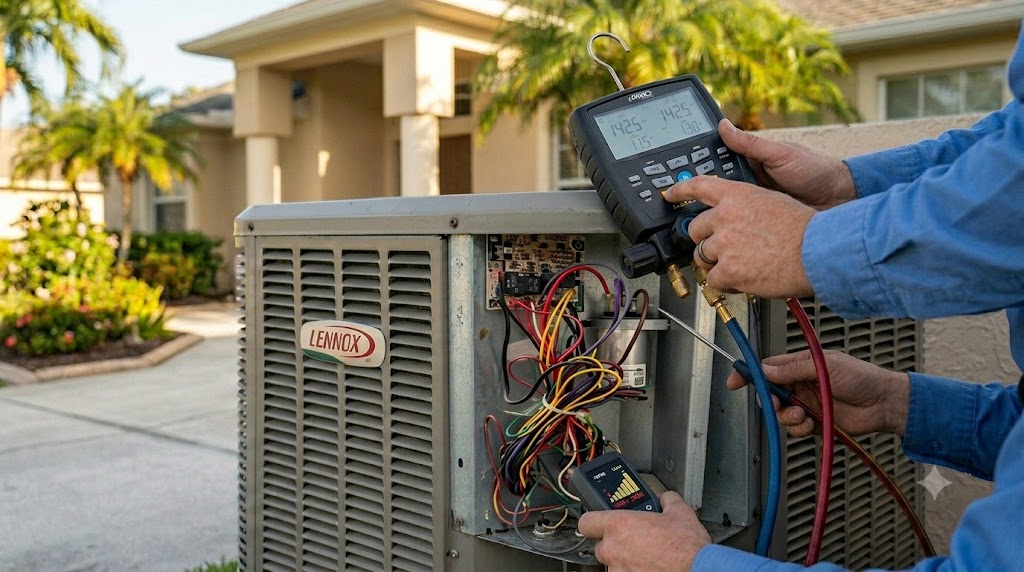
A real diagnosis is methodical and visible to you.
An honest technician runs a leak test before talking about refrigerant. Electronic detectors, nitrogen, dye, or soap and water all reveal where the charge escapes. He repairs the leak first, then weighs the refrigerant he adds so you see exactly how much went in. He writes down what he found and what he did. When a repair makes more sense than a replacement, he says so, even though the replacement pays him more. And he gives you a straight arrival window and an upfront price before the work starts, so the bill at the end matches the number you agreed to. If you want to see how a clear diagnosis reads, our team explains the process on the AC repair page.
How to check an AC contractor in Palm Beach County before they arrive
Two minutes of homework filters out most bad actors. Air conditioning work in Florida requires a Certified Air Conditioning Contractor license, and you can confirm any company's standing yourself. The state's official tool lets you verify a contractor license by name or license number through the Department of Business and Professional Regulation. It shows the license type, status, and any public disciplinary actions.
Before you book, do three things. Confirm the company holds an active CAC license and ask for the number. Confirm it carries insurance. Read recent reviews and look for repeat themes about honesty and follow-through, not just star counts. A company that answers these questions without flinching is telling you something. So is one that dodges them. Simple Action holds Florida license CAC1824605, and you can see live customer reviews on our site and across our Palm Beach County service area.
Other AC scams that show up in South Florida
The recharge trap gets the headlines, but a few others circulate through the county every summer.
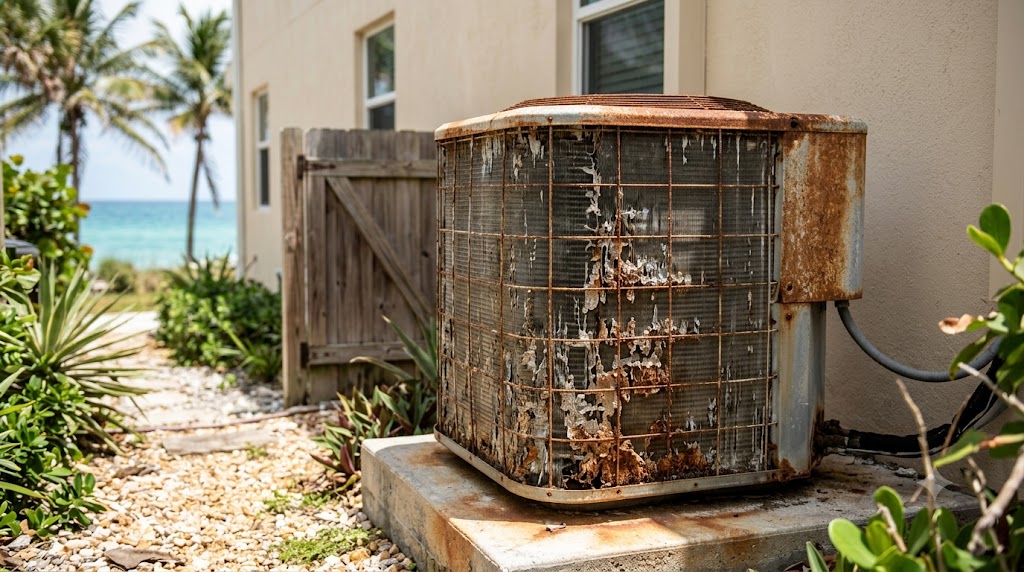
Real coastal wear gives a dishonest tech a believable story. Ask for proof, not a verdict.
The phantom part. A tech replaces a capacitor or contactor that was working fine, or charges for a part he never installed. Ask to see the old part. Ask to see the new one in its packaging.
The absentee-owner target. Snowbird homes and rentals with out-of-state owners are favorite marks, because nobody local is watching the work. If you own a seasonal home here, use a company that documents every visit in writing and sends photos. Our maintenance and tune-up visits are built around that kind of paper trail.
The fake emergency. A tech condemns a system that needs a small repair, betting that a hot house will push you toward the bigger sale. A real emergency AC call ends with your system running again or a clear, written reason it cannot be saved, not with a vague order to replace everything.
The lowball that grows. An ad price gets you on the schedule, then the total climbs once the tech is inside and you feel committed. The defense is the same every time. Get the price in writing first, and treat any number that moves without a reason as your cue to stop.
What to do if you think you got scammed
Slow the moment down. You do not owe anyone an instant signature, even in the heat. Tell the tech you want a written diagnosis and time to think, and do not pay cash on the spot for a major repair. Get a second opinion from a licensed company before you authorize a replacement.
If you already paid for work that smells wrong, keep every invoice, photo, and text message. Florida takes home-service fraud seriously. The Florida Attorney General publishes a consumer guide to spotting and reporting HVAC scams, and you can report suspected fraud to the state's hotline at 1-866-9-NO-SCAM. Documentation is what turns a complaint into action.
The honest-company checklist
Strip away the scare tactics and an honest AC company is easy to describe. It shows up in the window it promised. It diagnoses before it sells. It puts the price in writing before the work starts and holds to it. It repairs when a repair is right, even when a replacement pays more. And it stands behind the job afterward. That is the standard Simple Action holds itself to across Palm Beach County, and it is the same standard you should hold every company to, ours included. Ask the questions. Make the two-minute license check. The honest companies will thank you for it.
Frequently asked questions
Does my AC really need more refrigerant, or am I being scammed?
A healthy air conditioner runs on a sealed refrigerant charge and never needs a routine refill. If your refrigerant is low, you have a leak that needs to be found and repaired. A technician who adds refrigerant without first locating and fixing the leak is treating a symptom and setting up a repeat visit. Ask for a leak test before you agree to any recharge.
How often should an AC need a refrigerant recharge?
Never, under normal operation. Refrigerant is not consumed the way fuel is. The only reason a system needs more is a leak. So any company offering a yearly or seasonal refill as routine maintenance is describing a scam, not a service.
What are the biggest red flags of an AC repair scam?
Watch for a pitch for a scheduled refrigerant refill, a demand to decide or pay on the spot, a request for cash or a personal check, a full-replacement verdict with no written diagnosis, and surprise add-ons during an unrelated repair. One alone proves little. Several together, with a clock running, point to a scam.
How do I check if an AC contractor is licensed in Florida?
Use the Department of Business and Professional Regulation license tool at MyFloridaLicense.com. Search by company name or license number to confirm the contractor holds an active Certified Air Conditioning Contractor license and to see any disciplinary history. Air conditioning work in Florida requires this license, so an active CAC number is the baseline for hiring anyone.
Should I repair or replace my AC system?
It depends on the age, the cost of the specific repair, and how the equipment has held up against coastal salt air. Many South Florida systems run a solid 10 to 15 years inland and 8 to 10 years near the coast. An honest technician gives you a written assessment and a clear recommendation rather than an instant order to replace everything. If a replacement verdict arrives with no diagnosis and a same-day deadline, get a second opinion.
Need a straight answer on your system? Simple Action serves homeowners across Palm Beach County with upfront pricing, on-time arrival windows, and honest repair-versus-replace assessments.
Call 561-234-4224 or reach us at info@simpleaction.com.