Is an HVAC Maintenance Plan Worth It in Palm Beach County?
Vardan Hovhannisyan
Co-Founder

Date & Time
Someone just handed you a maintenance plan brochure and asked for a signature. Before you sign anything, picture the house three doors down from the Intracoastal. The technician who serviced that system for years ran the same routine every visit: check the filter, check the refrigerant, done. Nobody ever mentioned the white crust building up on the outdoor coil. That system lasted four years before the compressor failed. The house next door, serviced by a technician who actually checked for corrosion, is still running strong at twelve years.
That's the real question hiding inside "is a maintenance plan worth it." Everyone agrees maintenance matters. The real question is whether the plan you're being sold was built for a house that sits a few miles from salt water, or whether it's the same national checklist a company in Ohio would hand you.
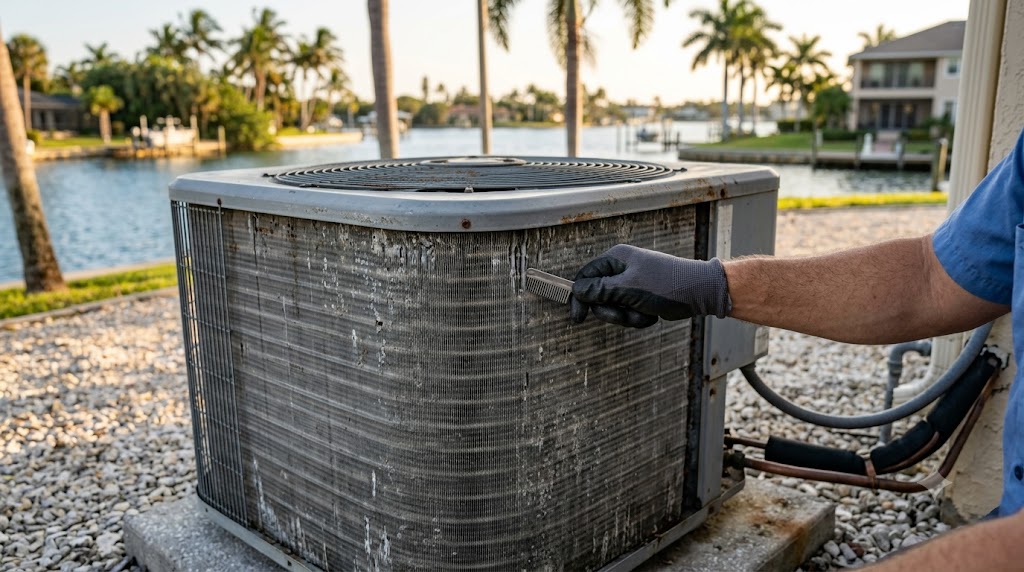
What Salt Air Actually Does to a Coastal AC System
Salt in the air is not just an inconvenience. It is chemically aggressive toward the metal your outdoor unit is made of. When salt settles on copper, aluminum, and steel, it breaks down the protective layer that normally keeps those metals from rusting, and it opens the door to pitting and corrosion. Coastal air conditioning systems often show faster corrosion and wear than systems farther inland, and the outdoor condensing unit usually takes the worst of it: the coil, the cabinet hardware, the fasteners, and the exposed electrical connections.
A corroded coil cannot transfer heat the way it's supposed to, so the system runs longer and harder just to hit the same temperature. Corroded electrical contacts create resistance, and resistance creates heat in places that were never designed to handle it. None of this shows up if a technician is only checking the filter and topping off refrigerant. It shows up on a coastal-specific inspection that actually looks at the coil, the cabinet, and the wiring for early signs of salt damage.
This is why a maintenance plan written for a house in Ohio or Atlanta isn't built for a house in Palm Beach County. The checklist has to change because the environment changed.
Why Florida's Climate Changes the Maintenance Checklist and the Interval
Two things make Florida different: the salt air along the coast, and the humidity everywhere else. Both push a maintenance plan toward a shorter interval and a longer checklist than what works in a drier, cooler climate.
ENERGY STAR recommends checking your filter every month during heavy-use season and changing it at least every three months, because a dirty filter slows airflow, forces the system to work harder, and wastes energy. That's the baseline everywhere in the country. In Palm Beach County, where the system runs nearly year round instead of a few months a year, that baseline gets used up faster.
Humidity adds a second layer. The EPA recommends keeping indoor relative humidity below 60 percent, and mold can begin to grow within a day or two once it sits above that line. Florida's outdoor humidity regularly runs 80 to 90 percent in summer, and an AC system that isn't pulling its weight, whether from a dirty coil, low refrigerant, or a clogged condensate line, lets that humidity creep into the house. A real maintenance visit here checks the condensate drain and confirms the system is actually dehumidifying, not just cooling.
We cover exact scheduling in more depth in how often you should service your AC in Florida. The short version: coastal and heavy-use homes do better on a schedule built around two visits a year, timed before the cooling season ramps up and again before the winter dry season, rather than the single annual visit that works fine up north.
The Checkable Promises That Separate a Real Plan From a Sales Pitch
Search "maintenance plan worth it," and you'll find plenty of homeowners who feel like they paid for a membership that turned into an upsell pitch every time the technician showed up. That skepticism is earned. Too many plans exist mainly to get a technician in the door to recommend a repair or a replacement the homeowner didn't ask for.
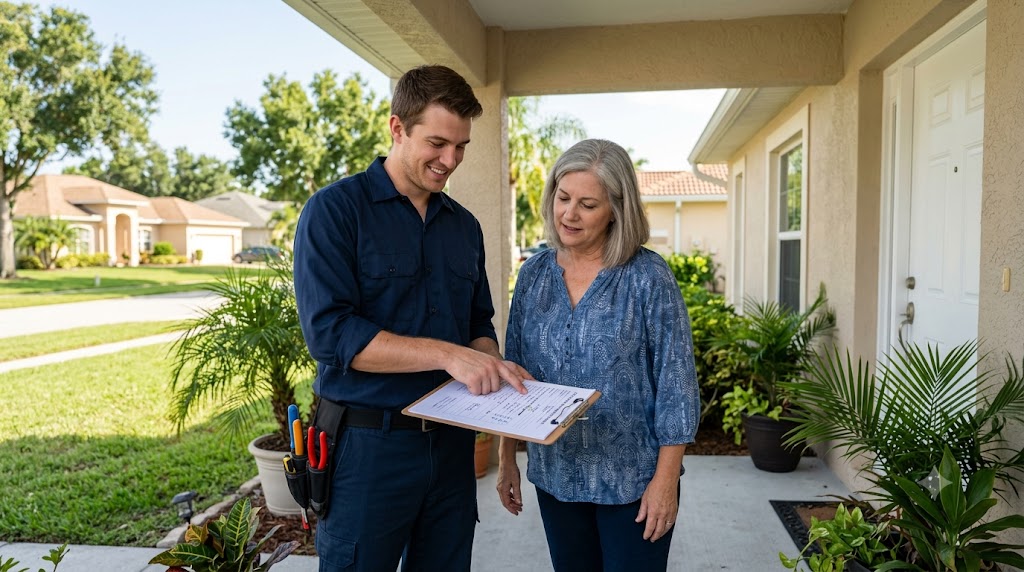
Here's how to tell the difference before you sign anything. A real plan puts its scope in writing: which components get inspected, which get cleaned, and how long the visit actually takes. A real plan states its arrival window as a specific range, not "sometime that day." A real plan commits to first-visit resolution for the issues it covers, instead of routinely rescheduling for a "specialist." And a real plan handles pricing honestly. You should never have to guess what a repair will cost after the visit is done. An upfront pricing promise, stated before any work begins, is the difference between a company earning your trust and one hoping you won't ask.
What to Ask Before You Sign: Contract Terms, Cancellation, and What Isn't Covered
Before you commit to any plan, ask three questions the brochure won't answer on its own.
First, can you cancel, and how. A plan that locks you into a long contract with penalties for leaving is a red flag, especially in a market where trust between homeowners and contractors is already thin. A plan built to earn repeat business year after year shouldn't need a cancellation penalty to keep customers around.
Second, what's the visit scope, in writing. Ask for the actual list of what gets inspected and cleaned at each visit, not a general description like "full tune-up." If the company can't produce a written scope, that's your answer.
Third, what happens if the system breaks down between scheduled visits. Some plans include priority scheduling and discounted repairs. Others cover nothing beyond the two routine visits a year and leave you calling around for emergency service like everyone else. Ask directly whether emergency AC service is part of the plan or a separate call, and get the answer before you need it at the worst possible time.
What Snowbirds and Seasonal Homeowners Need Added to the Plan
A maintenance plan does more work in a house that sits empty for months at a time. If nobody's home to notice a failing condensate pump or a system that has stopped dehumidifying properly, the first sign of trouble is often a musty smell and warped flooring when the owner returns in the fall.
Seasonal homeowners should ask for a plan that includes a summer departure visit and a fall startup visit, not just the standard schedule. The departure visit should confirm the condensate line is clear, the system is set to an appropriate humidity-control mode rather than shut off entirely, and there's a way to get an alert if something goes wrong while the house is empty.
This is also where hurricane season enters the picture. Storm prep and AC maintenance overlap more than most homeowners realize: a system that's already inspected and running clean is less likely to fail during the exact week a storm knocks out power and drives humidity through the roof. NOAA's hurricane preparedness guidance is worth reviewing every season regardless of your AC plan, and we walk through the AC-specific side of storm prep in how to prepare your AC for a hurricane.

How Simple Care Club Is Built Around These Standards
We built Simple Care Club around the same standards laid out above, because we think a maintenance plan should hold up to the questions in this article, not dodge them.
Every visit has a written scope specific to Palm Beach County conditions, including a coastal corrosion check on the outdoor unit, not just a filter swap. Arrival windows are stated as a real range, and we aim for first-visit resolution on covered issues instead of routinely calling in a "specialist." Pricing on anything outside the plan is disclosed upfront before work starts, never after. And membership doesn't lock you into a plan that only works for us. It's built to earn your business again next year.
We're one option among several honest HVAC companies in this county, and we'd rather earn the comparison than avoid it. Ask us the same three questions from the section above. Read the AC maintenance page for what a standard visit includes, or look at Simple Care Club directly for the full membership details.
Frequently Asked Questions
Is an HVAC maintenance plan worth it in Florida's coastal climate?
Yes, if the plan is actually built for coastal conditions. A generic national checklist misses salt-air corrosion and Florida's humidity load, the two biggest threats to a coastal AC system. A plan with a written scope, real arrival windows, and a coastal-specific inspection earns its cost. A plan that's just a filter check and an upsell pitch doesn't.
How do you know if a maintenance plan is legitimate and not just an upsell pitch?
Ask for the visit scope in writing before you sign. A legitimate plan lists specific tasks and sticks to them. An upsell-driven plan tends to be vague about what's actually included, and the technician routinely finds something extra to sell during what's supposed to be a routine visit. If every visit ends in a new recommendation, that's the pattern to watch for.
Can you cancel an HVAC maintenance plan?
A well-built plan lets you cancel without a penalty, usually with written notice before your next billing or renewal date. If a company requires a long-term contract or charges a fee to leave, ask why before you sign. A plan worth keeping earns your renewal instead of requiring it.
Does a maintenance plan cover emergency AC repairs?
It depends on the plan, and this is one of the most important questions to ask before signing. Some plans include priority scheduling and discounted rates on emergency repairs. Others cover only the routine visits and leave emergency calls as a separate charge. Get this answer in writing before you need it during a breakdown.
How often should AC maintenance happen in a Florida coastal home?
Most coastal and heavy-use Florida homes do best with two maintenance visits a year, one before the cooling season ramps up and one before the winter dry season, rather than the single annual visit common in cooler climates. See how often you should service your AC in Florida for the full breakdown.