AC Warranty Coverage: What It Actually Includes in Florida
Vardan Hovhannisyan
Co-Founder

Date & Time
What Does Your AC Warranty Actually Cover in Palm Beach County?
A homeowner in Boynton Beach found this out the hard way. His five-year-old condenser stopped putting out cold air, a technician diagnosed a failed compressor, and the manufacturer confirmed the part was covered under warranty. Good news, until the invoice showed up for the diagnostic visit, the refrigerant recovery, and the hours of labor it took to swap the compressor. The part was free. Nothing else was.
That gap between "the part is covered" and "the repair is free" catches more Palm Beach County homeowners off guard than almost anything else in the life of an AC system. Two separate warranties live inside every unit, and knowing where one ends and the other begins protects you long before anything breaks.
Two Different Warranties, One AC System
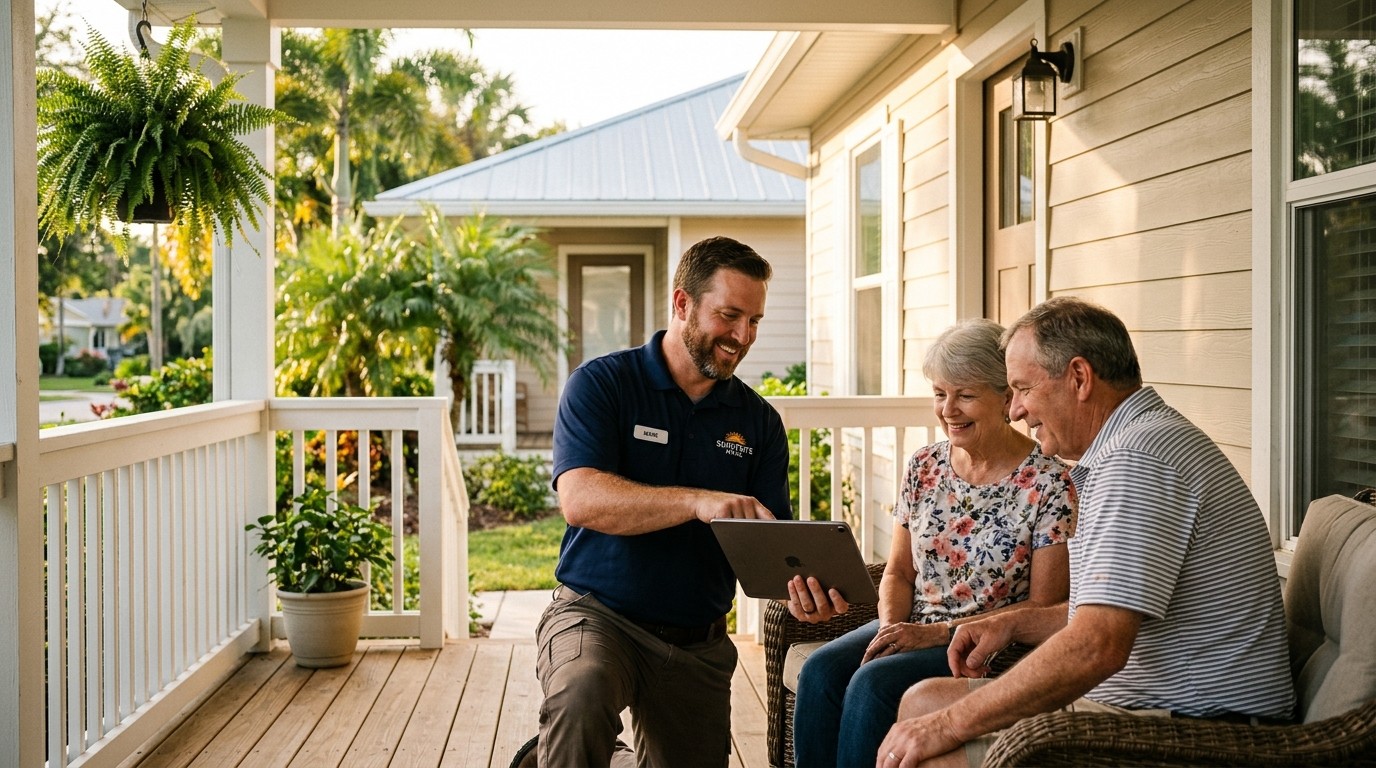
Every central air conditioning system carries two kinds of coverage, and they come from two different places. The manufacturer's limited warranty covers the physical parts inside the unit: the compressor, the coils, the circuit board, and similar components. If one of those fails because of a defect in materials or workmanship, the manufacturer sends a replacement part at no cost. That is the extent of it. The manufacturer does not pay for the technician's time, the trip to your home, or the cost of recovering and replacing refrigerant during the repair. Those labor costs fall under a separate labor warranty, which is typically offered by the installing contractor rather than the manufacturer.
It is an easy assumption to make that a "10-year warranty" on a new system means ten years of free repairs. It actually means ten years of free parts, and the labor to install those parts is a completely different promise that you need to check separately.
Florida Homeowners Get a Registration Protection Most States Don't
Most manufacturers ask you to register a new system within 60 to 90 days of installation. Register on time, and the parts warranty runs the full term, often 10 years. Miss the window, and the coverage drops back to a shorter base warranty, commonly 5 years. Goodman spells this out plainly: register within 60 days and the warranty can run up to 10 years, or in some cases for as long as you own the home. Miss it, and you are down to 5 years.
Here is the part almost nobody in Palm Beach County knows. Florida law changed this for residents. Trane's own warranty documentation confirms it directly: beginning July 1, 2024, failing to complete product registration no longer reduces a Florida homeowner's warranty rights or shortens the warranty length. Goodman's registration terms carry the identical carve-out, naming Florida, California, Georgia, and Quebec as places where registration is not required to receive the full rights and remedies of a registered owner.
That does not mean registration is pointless here. You still want the paperwork on file as proof of purchase and installation date, and a good contractor should handle that step for you without being asked. But if a system in Palm Beach County was never registered, that alone does not shrink the warranty the way it would in most other states.
How Long Manufacturer Parts Warranties Actually Run
Coverage lengths vary by brand and by which specific part is failing, but the pattern across major manufacturers looks similar. A base, unregistered warranty typically covers the compressor, outdoor coil, and other parts for 5 years. Registering the system on time extends that same coverage to 10 years on most residential air conditioners and heat pumps. Some manufacturers go further on the compressor specifically. Select Trane models carry up to 12 years of compressor coverage under the registered warranty, and select Goodman models include a lifetime compressor warranty for the original registered owner, meaning it lasts for as long as that person owns and lives in the home.
Furnaces and packaged units often follow the same 5-to-10-year pattern for general parts, though heat exchangers on furnace equipment can carry a much longer 20-year warranty on their own. The exact numbers differ by manufacturer and by product line, so the warranty certificate for your specific model is the only document that tells you the real terms.
The Labor Warranty Is a Separate, Much Shorter Promise
Once you understand that the manufacturer only covers parts, the labor warranty becomes the piece that actually determines whether a covered repair costs you anything. A labor warranty picks up what the manufacturer leaves out: the diagnostic visit, the technician's time, and the trip to pick up the replacement part from a distributor. Without one, a "free" part under manufacturer warranty can still come with a full labor invoice.
Labor coverage from the installing contractor is commonly limited to one year unless you buy an extension. Simple Action includes a one-year labor warranty on installations as one way to close that gap for the first year a system is in the ground. Other reputable Palm Beach County contractors offer similar protection, and some offer longer terms. The number itself matters less than getting it in writing before you sign, so ask exactly how long your labor coverage runs and what it includes.
What Actually Voids Coverage in Palm Beach County
Warranty language reads generously until something happens that falls into an exclusion. The most common ones show up again and again.
Skipped maintenance. If a technician traces a failure back to a lack of routine maintenance, such as a condenser that has been running for years without a cleaning, both the parts and labor warranty can be denied for that repair.
Unlicensed or DIY installation. Manufacturers require installation and repairs by a licensed HVAC professional, and failing to use one can void the warranty even if the part itself was never defective.
Storm and lightning damage. Failures caused by weather events, sometimes called acts of God, are generally excluded from both parts and labor warranties. That kind of damage typically falls to homeowner's insurance instead, which matters in a hurricane-prone county where a surge or a direct lightning strike is a real possibility every season.
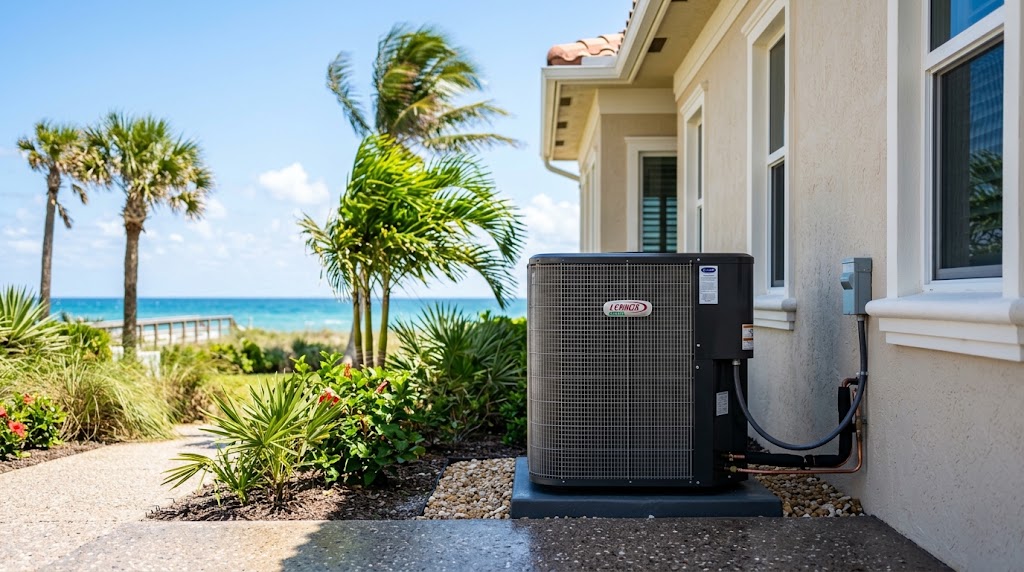
Salt air corrosion. This one is specific to coastal Florida, and it catches homeowners in Palm Beach, Jupiter, Boca Raton, and Delray Beach more than almost anywhere else. Standard residential air conditioners are not built with corrosion protection for seacoast exposure, and a standard parts warranty does not cover a coil that fails from salt-air corrosion. Carrier addresses this directly with its coastal product line, which uses welded aluminum coil construction specifically to resist galvanic corrosion near the ocean, backed by a dedicated 5-year parts warranty that covers failure from seacoast corrosion. A standard, non-coastal unit installed a mile or two from the water simply does not carry that protection, which is why coil failure from corrosion is one of the more common uncovered repairs in coastal Palm Beach County neighborhoods.
What's Actually Covered, Component by Component
The compressor is usually the longest-covered part in the system, often matching the full registered warranty term of up to 10 to 12 years, and occasionally covered for as long as the original owner keeps the home under select manufacturer programs. The outdoor and indoor coils typically carry the same registered term as the compressor, generally 10 years. Circuit boards and capacitors are covered under the general parts warranty as long as the failure is a genuine defect, but there is an important distinction worth knowing before your next maintenance visit. If a technician notices a capacitor that is weakening but still functioning, replacing it as a precaution is not treated as a covered warranty claim. The part has to actually fail first. That is a normal, and reasonable, condition, but it explains why a technician will sometimes flag a part during maintenance without replacing it under warranty the same day.
What to Ask Before You Sign
A few questions before installation day protect you far more than reading the fine print after something breaks.
Ask for the manufacturer's warranty certificate in writing, not just a verbal summary of the terms. Ask exactly how long the contractor's labor warranty runs and what it includes, since diagnostic fees and trip charges are not automatically part of every labor warranty. Ask whether the contractor handles registration on your behalf and confirm the installation date that will be filed, since that date is what starts the clock on your parts coverage regardless of the Florida registration rule. Ask whether annual maintenance is required to keep the warranty active, and get that requirement in writing rather than taking it on faith. A documented maintenance plan does double duty here: it protects the warranty and it catches small problems before they become the kind of failure nobody wants to pay for.
None of this requires confrontation. A contractor who is comfortable putting warranty terms in writing before you sign is telling you something important about how they run their business, and it is one of the same red flags worth checking for in our guide to common AC repair scams in Palm Beach County.
Simple Action's Approach to Warranty Coverage
Simple Action lays out what is covered and what isn't before any AC installation begins, in plain language, without burying it in a contract you are handed at the last minute. Every installation includes a one-year labor warranty, and the company is licensed, certified, and insured under Florida AC Contractor License CAC1824605. That is one honest option among several capable ones in Palm Beach County, and the goal is simple: no surprise invoices for work you thought was covered, an upfront pricing promise instead of a moving target, and on-time arrival windows so you are not left guessing. If a repair needed on your system is not covered under warranty for one of the reasons above, you will hear that explained clearly, not discovered on an invoice after the fact.

Frequently Asked Questions
How long does a manufacturer's AC warranty last in Florida?
Most manufacturers offer a base warranty of 5 years on parts, extending to 10 years when the system is registered within 60 to 90 days of installation. In Florida, failing to register does not shorten this coverage the way it does in most other states, since state law protects a Florida homeowner's warranty rights regardless of registration.
Do I have to register my new AC system for the warranty to be valid in Florida?
No. Florida is one of the states where manufacturers are required to honor full warranty rights and length even if the system was never registered. It is still smart to have the registration on file as proof of the installation date, but the coverage itself is not reduced for skipping that step.
Does an AC warranty cover the compressor?
Yes, the compressor is typically the longest-covered part under a manufacturer's parts warranty, often running the full registered term of up to 10 to 12 years and occasionally longer on select models. That coverage applies to the part itself, not the labor to remove and replace it.
What voids an AC warranty?
The most common reasons include a lack of documented routine maintenance, installation or repairs performed by someone other than a licensed HVAC professional, and damage from storms, lightning, or other weather events. Coastal salt-air corrosion is also typically excluded from a standard, non-coastal unit's parts warranty.
Does living near the coast affect my AC warranty coverage?
Yes. Standard residential air conditioners are not built with corrosion protection for seacoast exposure, and a standard parts warranty generally does not cover coil failure caused by salt-air corrosion. Manufacturers offer dedicated coastal product lines with corrosion-resistant construction and a separate warranty specifically for that failure mode, which is worth asking about for homes near the water in Palm Beach, Jupiter, Boca Raton, or Delray Beach.