Heat Pump vs. Air Conditioner: The Palm Beach County Answer
Vardan Hovhannisyan
Co-Founder

Date & Time
Two proposals sit on your kitchen table. One says straight cool. The other says heat pump. The numbers at the bottom sit close enough together that the difference does not explain itself, and the salesperson who dropped them off spent most of the visit talking about financing.
Here is what nobody told you. In cooling mode, those two machines are the same machine.
That single fact reorganizes the whole decision. The question is not which system keeps your house cooler in August. Both do that identically. The question is what happens on the handful of January nights when your thermostat asks for heat, and whether the proposal in front of you says so in plain language.
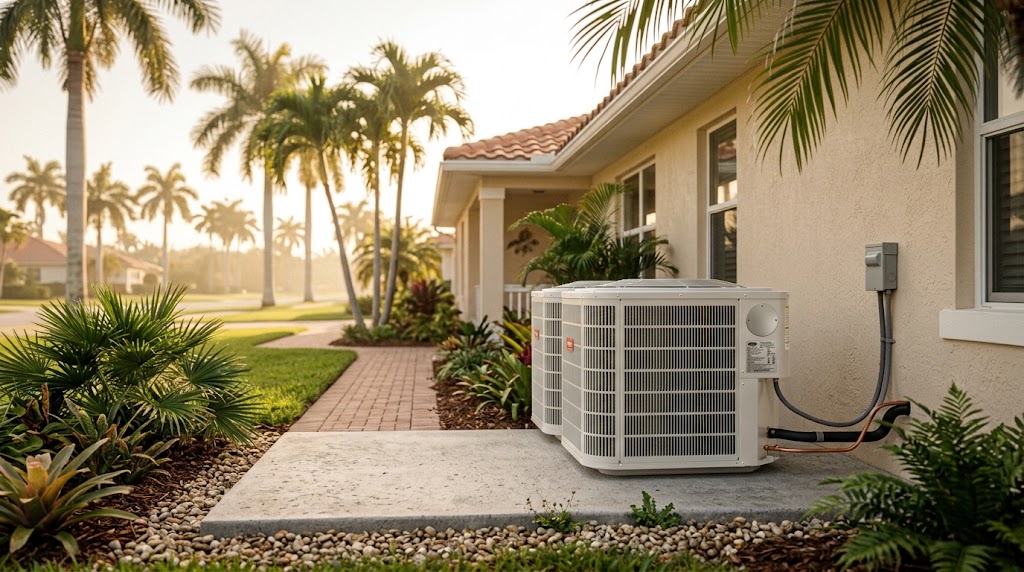
Your AC and a heat pump are the same machine until you ask for heat
Both systems run the same refrigeration cycle. A compressor pressurizes refrigerant. The outdoor coil dumps heat into the air outside. The indoor coil absorbs heat from the air inside. Your blower pushes the cooled, dried air through the ducts. That is an air conditioner, and that is also a heat pump, running in cooling mode.
A heat pump adds one part: a reversing valve. Flip it and the refrigerant runs the other direction. The outdoor coil starts absorbing heat from outdoor air, the indoor coil starts releasing it, and the same equipment that cooled your house in August warms it in January. That is the entire mechanical difference. One valve.
Everything else carries over. Same compressor family. Same coils. Same air handler. Same ducts. The thermostat needs one extra wire to tell the reversing valve which direction to run, and that is the extent of the change inside your house.
The efficiency standards confirm how little separates them on the cooling side. As of January 1, 2023, the federal minimum for a split-system heat pump is 14.3 SEER2 and 7.5 HSPF2, a standard that applies nationally. Split-system air conditioners under 45,000 Btu sold into the Southeast region carry a minimum of 14.3 SEER2, and equipment that fails the standard cannot be installed here at all. Read those two numbers next to each other. In Florida, the air conditioner and the heat pump answer to the same cooling requirement.
So when a contractor tells you a heat pump cools better, or cools worse, or handles humidity differently, that person is selling rather than explaining. If you want the deeper version of what those efficiency numbers actually buy you, we broke that down in what counts as a good SEER rating in Florida.
What "straight cool" actually means on a Palm Beach County proposal
A straight cool system cools. That is all it does. Nothing inside it makes heat.
So when your thermostat calls for heat in a straight cool house, something else answers. That something is a bank of electric resistance strips mounted in the air handler. Coils of wire that glow, the same way a toaster glows. Installers size them in kilowatts and wire them to their own breaker.
The strips work. They will warm your house on the coldest night Palm Beach County produces, and they will do it without complaint. They are also the most expensive way to make heat in a residential system. The Department of Energy states the gap directly: electric resistance heating requires at least twice as much energy as a heat pump to keep a house warm.
Worth knowing: a heat pump installed here usually carries heat strips too, as backup. The two systems are not strips versus no strips. The difference is which one runs first.
How much heating a Palm Beach County home actually does
Federal building guidance sorts the country into climate regions, and most of those regions get defined by heating demand. Cold starts around 5,400 heating degree days. Very cold starts around 9,000. Subarctic starts around 12,600.
South Florida does not get sorted that way at all. It lands in hot-humid, a category the Department of Energy defines by wet-bulb hours during the warmest six months of the year, with no heating measure in the definition.
Sit with that. The federal description of our climate does not mention heating.
We run heat in this county a handful of nights a year. Mostly January, mostly overnight, mostly for a few hours before sunrise. Nobody in Palm Beach Gardens buys a system for its heating performance, and any company that tries to sell you one on that basis is reaching.
So why does the decision matter at all?
Because of what sits on the other side of it. Florida leads the country in all-electric housing. In 2020, 77 percent of Florida homes, about 6.2 million of them, used electricity as their only source of home energy, the largest share of any state.
No gas furnace. Not in your house, not in your neighbor's, not anywhere in this comparison. In most of the country, the homeowner who passes on a heat pump falls back to a furnace. In Palm Beach County the fallback is resistance strips, which is the priciest heat in the catalog. The decision is small, the decision is rare, and the decision is real.
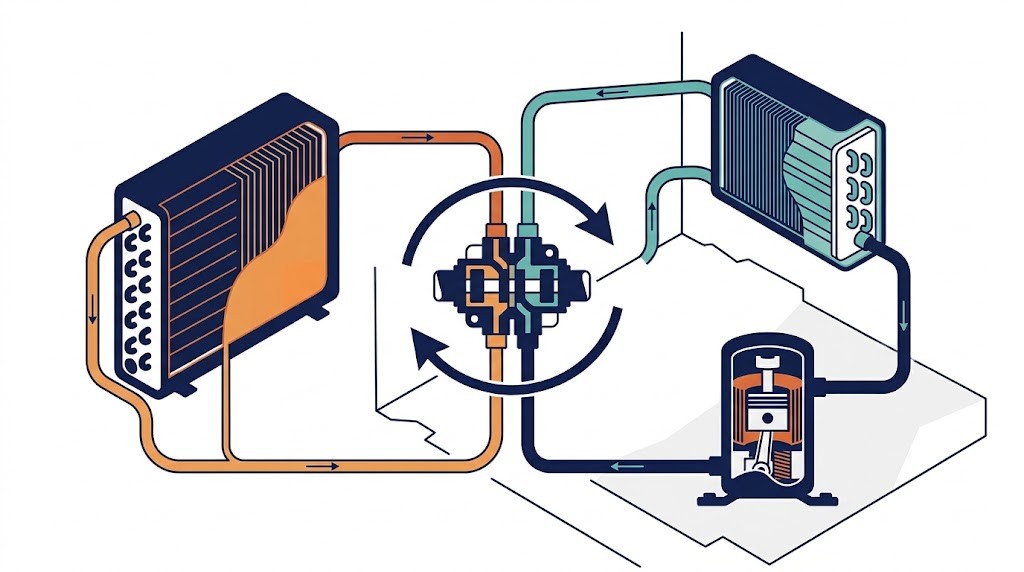
Where a heat pump earns its keep, and where it changes nothing
Start with what actually changes.
On those few January nights, the compressor carries the load instead of the strips, at roughly half the energy or better. The strips stay installed as backup for the rare hour the compressor falls behind. You own one piece of equipment that does both jobs, which means one maintenance visit, one warranty, and one system to understand. And when a cold snap parks over the county for a full week, which happens here every few winters, the difference stops being theoretical and starts showing up on the bill.
Now the part most articles skip. Here is what does not change.
Your ductwork stays exactly as it is. A heat pump breathes through the same ducts a straight cool system does, so nobody needs to open your ceilings. Your cooling comfort stays the same, because the cooling side is the same. Your humidity control stays the same. Your filter, your maintenance rhythm, your thermostat routine in summer, all unchanged.
Two things do change beyond the box itself. The thermostat needs that reversing valve wire, which is trivial on a new install and worth confirming on a swap. And the electrical scope deserves an honest look. Plenty of older Palm Beach County homes and condos still run 100 amp service, and a heat pump paired with a strip kit draws real current. Ask that question before you sign, not after the crew arrives.
So is a heat pump worth it in Palm Beach County? Not for the reason the national articles give. It will not transform your energy use, because cooling is where nearly all of your energy goes and both machines cool identically. It earns its place on the handful of nights you actually ask for heat, and on the simplicity of owning one system that handles both seasons. That is a modest, honest case. We would rather give you the modest honest case than a dramatic one you discover was wrong in February.
The two Palm Beach County problems that are not in the brochure
Salt air does not care which system you bought
Palm Beach County puts thousands of outdoor units within a mile or two of salt water. Salt goes after the aluminum fins and copper tubing of the outdoor coil, and it works year round whether you run the system or not. A heat pump's outdoor unit sits in that same air and carries a reversing valve, which adds one more component to the exposure list.
Coastal-grade coil coatings handle most of it. Rinsing the outdoor coil with fresh water on a regular schedule handles a good deal more. If your unit sits east of Federal Highway, ask any contractor what corrosion protection the specific equipment carries, and treat a vague answer as an answer. We wrote about how much this shortens equipment life in how long AC units actually last in coastal Florida.
Your association gets a vote
Swapping straight cool for a heat pump changes the outdoor unit. Footprint changes. The pad sometimes changes. Sound ratings sometimes change. Palm Beach County holds a dense stock of condos, townhomes, and deed-restricted communities with written rules about equipment placement, screening, and noise limits.
Approval comes before installation, not after. A contractor who works these communities regularly will ask about your association in the first conversation rather than the last. We covered the approval process in detail in what your HOA controls about your AC replacement.
What an honest proposal names
You will learn more from how a proposal is written than from what it costs. Four things separate a real one from a template with your address pasted in.
A load calculation for your actual house
The proposal should rest on a Manual J load calculation performed on your home, accounting for your square footage, window area, orientation, insulation, and duct condition. Sizing from the old unit's tonnage repeats whatever mistake came before. Sizing from square footage alone skips the work. Ask to see the calculation. A contractor who ran one will hand it over. We walk through why this matters in what size AC unit a Florida home actually needs.
Matched indoor and outdoor units, named by model number
Efficiency ratings describe a matched system, not a single box. A new outdoor unit paired with an existing indoor coil rarely delivers its rated performance, and it complicates warranty claims later. The proposal should name both model numbers.
FPL Participating Independent Contractor status, stated plainly
Florida Power and Light runs a residential HVAC rebate, and qualifying requires installation by an FPL Participating Independent Contractor. Ask directly whether your contractor holds that status and whether the specific system qualifies.
One caution, and FPL states it themselves rather than us: the decision to select, hire, and manage the participating contractor is the sole responsibility of the FPL customer. Being on the list is a rebate credential. It is not a workmanship endorsement, and FPL does not present it as one. Vet the company the same way you would without it.
Warranty and labor terms in writing
Manufacturer parts coverage and labor coverage are two different things, and the second one is where people get surprised. Get both in writing, with the registration requirement spelled out. We unpacked the difference in what your AC warranty actually covers.
Once you hold two proposals that name all four, the decision gets simple. Weigh how often your house genuinely calls for heat, what your electrical panel has room for, what your association allows, and how close your outdoor unit sits to salt water. Those four variables decide it. The rest is noise.
Frequently asked questions
Why don't contractors like heat pumps?
In most of the country, the complaint traces back to gas. Contractors who sell furnaces know furnaces, and a heat pump asks them to explain a system that heats differently. Florida removes that bias entirely, since almost nobody here has gas to defend. What remains is the honest version: a reversing valve is one more part that eventually fails, and a heat pump calls for a technician who understands defrost logic and heating-mode diagnostics rather than cooling alone. That is a real service consideration. It is not a reason to avoid the equipment.
What is the major disadvantage of a heat pump?
Two, and both are modest in this climate. The reversing valve adds a failure point that a straight cool system does not have. And in a coastal county, the outdoor unit works in both seasons while sitting in salt air, so corrosion protection and regular coil rinsing matter more here than they do inland. Neither disadvantage involves cooling performance, because the cooling side is identical.
Why is my electric bill so high with a heat pump?
Almost always because the backup heat strips ran instead of the compressor. That happens when the thermostat sits in emergency heat mode, when someone jumps the setpoint several degrees at once and triggers the strips to catch up, or when the heat pump itself has a fault and the system falls back to its backup. Strips draw far more power than the compressor does. A bill that spikes in one cold week and returns to normal afterward points squarely at the strips. Get the system checked rather than assuming the equipment underperforms. Our guide to why electric bills spike in Palm Beach County covers the cooling-season version of the same question.
What is the difference between emergency heat and auxiliary heat?
Auxiliary heat runs automatically. The system decides the compressor needs help, brings the strips online alongside it, and shuts them off when the house catches up. That light on your thermostat reports normal behavior. Emergency heat is a manual switch you flip yourself, and it shuts the compressor out entirely so the strips carry the whole load. Reserve it for an actual heat pump failure. Leaving a thermostat in emergency heat through a cold snap produces exactly the bill described above.
Do heat pumps work in Florida?
They work well, and the more useful question is how long they last. Coastal placement drives equipment life here more than heating demand does. A unit two blocks from the ocean lives a harder life than an identical unit ten miles inland, and that gap applies to straight cool systems just as much as heat pumps. Choose corrosion protection for your actual location, rinse the outdoor coil on schedule, and keep up with maintenance. Location and care decide the lifespan. The reversing valve barely registers.
One honest summary
A heat pump and an air conditioner cool your Palm Beach County home the same way, to the same federal standard, through the same ducts. One of them also heats without resorting to the most expensive heat available. That is the whole comparison, and any company that dresses it up as more than that is selling.
Simple Action installs both, and we will tell you which one fits your house before we tell you anything about financing. Licensed under Florida CAC1824605, available around the clock, and straightforward about what your home actually needs. Take a look at our approach to AC installation and replacement, or reach us at 561-234-4224.