How to Prepare Your AC for a Hurricane
Vardan Hovhannisyan
Co-Founder

Date & Time
Here is the part that trips people up. NOAA's 2026 Atlantic hurricane season outlook calls for a below-normal year, with a 55 percent chance of fewer storms than average. That sounds like good news. It is not a reason to skip prep. As National Weather Service director Ken Graham put it, it only takes one storm to make a very bad season. A quiet basin means nothing to the one house the storm tracks over. If that house is yours, your season is at 100 percent.
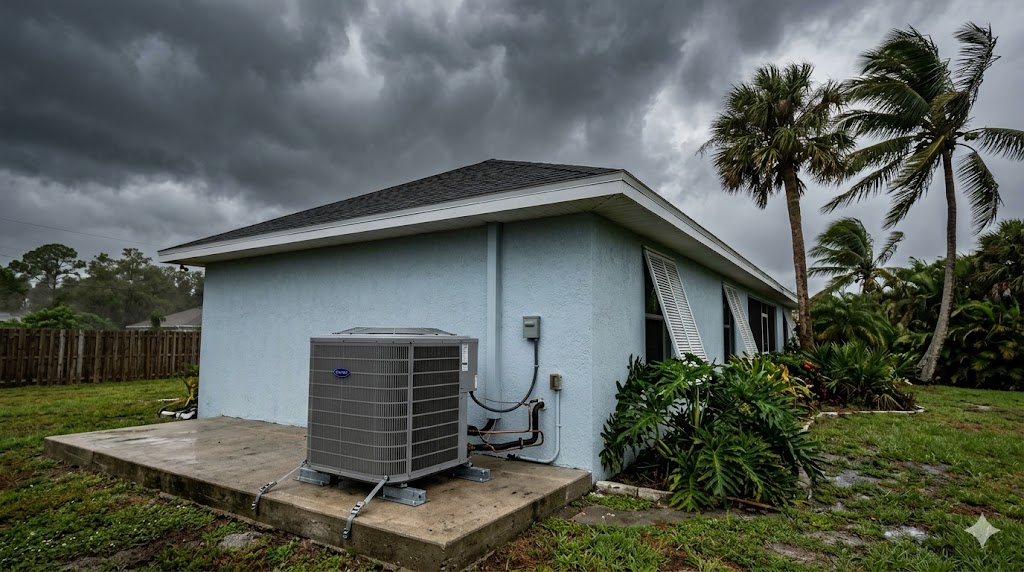
Your outdoor condenser sits in the open, bolted to a pad, exposed to wind, flying debris, flood water, and the power surge that follows every outage. The good news is that protecting it takes a short list of steps, and most of them cost you nothing but an afternoon. Here is the full checklist we run with Palm Beach County homeowners, broken into before, during, and after.
What a below-normal 2026 forecast actually means for your home
Read the forecast closely and the word "below-normal" looks a lot less calming. NOAA still projects 8 to 14 named storms this season, with 3 to 6 of them reaching hurricane strength and 1 to 3 growing into major hurricanes. The season runs June 1 through November 30, and the historical peak lands from mid-September into October.
Here is why that matters in Palm Beach County. A seasonal outlook describes the whole Atlantic basin. It says nothing about where storms make landfall. NOAA is blunt about that point: the outlook is not a landfall forecast. So a calm basin and a direct hit on the South Florida coast live happily in the same season. The danger of a quiet year is human, not meteorological. People relax, skip the pre-season tune-up, and leave the surge protector for next year. Then one storm spins up in August and the unprepared unit takes the damage.
Treat every June the same way, regardless of the headline number. The work below does not change based on the forecast.
Before the storm: your AC prep checklist
Most storm damage to an air conditioner traces back to something you can handle weeks ahead of any warning. Start here.
Book a pre-season tune-up. A clean coil, a tight electrical connection, and a charged system handle a power blip far better than a neglected one. A pro also spots a loose disconnect or a corroded contactor before the wind finds it. This is the single best thing you do before June, and it doubles as the maintenance your warranty wants. Our AC maintenance and tune-up service covers exactly this.
Trim branches over the unit. High wind snaps overhanging limbs and drops them on the condenser. Manufacturer guidance from Trane on storm prep recommends cutting back any branches that hang over the unit or the roof, and treating it as year-round upkeep rather than a last-minute scramble.
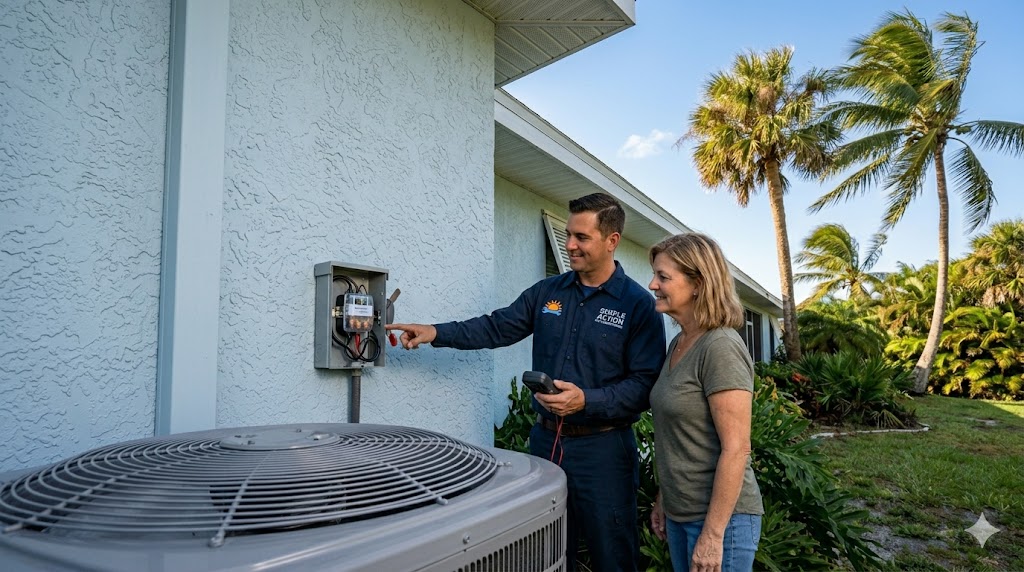
Install an HVAC surge protector. The biggest threat to your system is not the wind. It is the surge. When the grid drops and snaps back, the voltage spike rides straight into the compressor and the control board. Trane recommends a surge protector built for HVAC equipment, installed by a professional, rated for heat and humidity. A whole-house unit at the panel stops the first spike, and a dedicated protector at the disconnect adds a second layer for the condenser.
Secure the condenser. In Florida, code requires the condenser bolted to a hurricane pad, and Trane notes that a second-story unit raised off the ground needs hurricane straps to hold it through strong gusts. If your property floods, ask a pro about raising the unit on a stand for better protection.
Learn your shutoffs now. The federal preparedness guidance at Ready.gov hurricanes says to learn where and how to shut off your home's electricity before the season starts, not during the storm. Find the breaker for the air handler and the condenser today, and label it.
Should you cover or wrap your outdoor unit?
This one confuses people, so here is the plain answer. Cover the unit only to block flying debris right before a storm, using plywood weighed down or a board cut to fit over the top. Never run the system while it is covered, because a wrapped condenser cannot breathe and the compressor overheats fast.
And do not leave a tight cover on for weeks at a time. A sealed wrap traps humidity against the metal, and in a salt-air climate that trapped moisture speeds up corrosion on the coil and cabinet. Cover it for the threat window, then take the cover off the moment the danger passes and before you restore power. Think of the cover as a hard hat for the storm, not a raincoat for the season.
During the storm: shut the system down
Pre-cool the house first. Before the winds arrive, drop the thermostat lower than usual, close the blinds, and keep doors shut. Trane recommends pre-cooling so the home holds its temperature longer once the power goes out. A well-cooled, closed-up house stays comfortable for hours after an outage.
Then cut the power. When tropical-storm-force winds of 39 miles per hour or higher head your way, turn the system off at the thermostat and at the breaker. Trane is clear on the reason: lightning and the surge that follows an outage damage the unit, and debris lodged in a running condenser burns out the motor. A unit that is already off rides out the storm and switches back on clean.
Ready.gov adds the safety layer. If flooding starts, shut off electricity at the main breaker, and never touch electrical equipment while you are standing in water. Your comfort matters, but your safety comes first.
After the storm: restart your AC safely
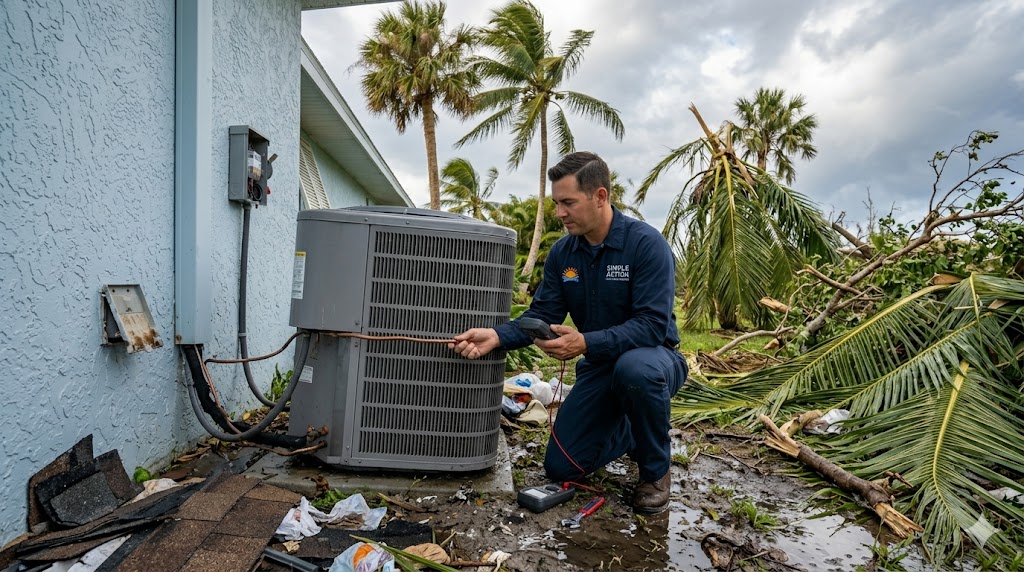
This is where good intentions break expensive equipment. Do not flip the breaker back on the second the lights return. Trane stresses checking the unit for damage before you restart it, because flooding or flying debris damages a system in ways that running it makes worse.
Walk the condenser first. Look for standing water at the base, dents in the cabinet, bent fins, debris jammed in the coil, and disconnected or kinked lines. If the unit sat in flood water, if a tree hit it, or if you see anything torn loose, leave it off and call a licensed technician. A submerged condenser holds water and grit inside the electrical components, and powering it up turns a repair into a replacement. If your system took a hit and you need help fast, our emergency AC service runs 24/7.
If the unit looks clean and dry, restore power and let it run. Getting cool, dry air moving again helps keep mold and mildew out of the house during the humid days that follow a storm.
Why Palm Beach County systems take a double hit
Coastal homes carry a burden inland homes do not. Salt in the ocean air settles on the coil and the cabinet, breaks down the protective layer on the metal, and rusts the system from the outside in. A storm makes that worse in two ways at once. The surge stresses the electronics, and the wind-driven salt spray drives corrosion harder than a normal sea breeze.
That double hit is why a coastal condenser benefits from more frequent rinsing and inspection than a unit a few miles inland. Homes within a mile or two of salt water see corrosion sooner, and a storm season accelerates it. Rinse the coil with fresh water on a schedule, keep the area around the unit clear, and pair that with a real maintenance plan. If you want the full picture on protecting a coastal system year-round, start with our HVAC services overview, and check that we cover your city on the Palm Beach County service areas page.
One honest checklist, from a local contractor
We built this guide the way we run a service call: tell you the truth, give you the steps, and let you decide. Simple Action Air Conditioning is family-owned, licensed under Florida AC contractor license CAC1824605, certified, and insured, and we work across Palm Beach County around the clock. We back every visit with an upfront pricing promise, an on-time arrival window, a satisfaction guarantee, and respect for your home. Quality work, one simple action at a time.
Run the before-storm list this week. Book the tune-up, add the surge protector, learn your shutoffs. When a storm shows up later this season, you will spend ten minutes preparing instead of a week recovering.
Frequently asked questions
Should I cover my AC unit during a hurricane?
Cover it only to block flying debris, and only right before the storm. Use plywood or a board over the top, weighed down. Never run the unit while it is covered, and take the cover off as soon as the threat passes. A long-term sealed wrap traps moisture against the metal and speeds up corrosion, which is a real problem in a salt-air climate.
Should I turn off my AC during a hurricane?
Yes. When tropical-storm-force winds of 39 miles per hour or higher approach, turn the system off at the thermostat and at the breaker. That protects the compressor and control board from the power surge that follows an outage, and from lightning. If flooding starts, Ready.gov advises shutting off power at the main breaker for safety.
Can I run my AC during a hurricane?
No. Running the system during the storm exposes it to surge damage when the power drops and snaps back, and debris pulled into a running condenser burns out the motor. Pre-cool the house before the winds arrive, then shut the system down and let it ride out the storm switched off.
How do I restart my AC after a power outage?
Inspect the outdoor unit before you restore power. Look for standing water, dents, bent fins, debris in the coil, and loose lines. If the unit was flooded or struck, leave it off and call a licensed technician, because powering up a damaged system makes the damage worse. If it looks clean and dry, restore power and let it run to keep humidity down inside.
Does my AC need a surge protector in Florida?
A surge protector is one of the smartest protections you add before storm season. The voltage spike that follows an outage is the most common storm-related cause of compressor and control-board failure. A whole-house protector at the panel plus a dedicated HVAC protector at the disconnect gives your system two layers of defense, and a pro installs both quickly.