Why Your AC Won't Turn On (And the Florida Storm Habit Behind Most Cases)
Vardan Hovhannisyan
Co-Founder

Date & Time
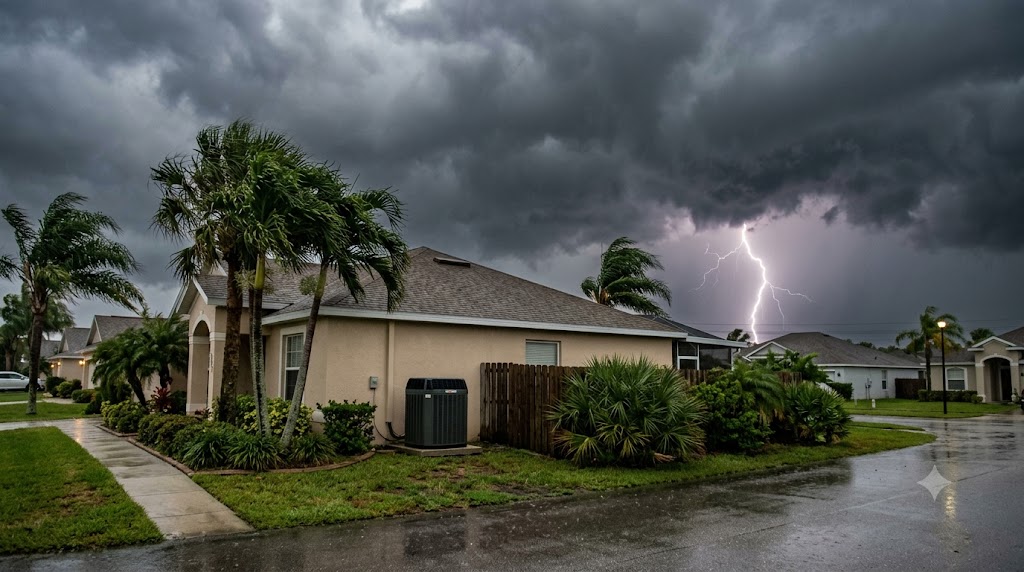
A thunderstorm rolled through Palm Beach County last night. This morning, the air conditioner will not turn on. No hum from the outdoor unit, no click from the contactor, nothing. That timing is not a coincidence. Florida sees more thunderstorm activity than any other state in the country, and a large share of the "AC won't turn on" calls a technician takes the day after a storm trace back to the same habit: leaving the system connected and running straight through the lightning instead of shutting it down at the disconnect first.
This guide walks through what is actually happening when a system will not start, starting with the storm-driven cause that is most common in this part of Florida, then the ordinary electrical and mechanical reasons that apply anywhere. It ends with a straight answer on when a homeowner can safely check something and when the only safe move is to call a licensed technician.
What's Actually Happening: A Quick Symptom-to-Cause Guide
Before doing anything else, match what you are hearing (or not hearing) to the list below. It will point you toward the right section of this guide and tell you whether this is a five-minute check or a call to a professional.
What you notice | Most likely cause
|
|---|---|
Complete silence outside and the thermostat screen is blank too | Tripped breaker, blown fuse, or the outdoor disconnect switch got bumped or turned off |
Thermostat and indoor blower work, but the outdoor unit stays silent | A problem isolated to the outdoor unit's own circuit: its breaker, a blown fuse, a failed contactor, or a bad capacitor |
Faint hum or click outside, but the fan blades do not spin | A weak or failed run capacitor |
Breaker trips again the instant you reset it | An active short or an overloaded component. Stop resetting it and call a professional |
System ran fine before a storm, dead after | Lightning-driven power surge, likely damage to the capacitor or control board |
No cooling for a while first, then the system shut off completely | A frozen coil (often from a dirty filter) tripped a safety switch that is now blocking a restart |
Florida's Real Habit That Kills AC Units During Storms
No other state in the country sees as much thunderstorm activity as Florida. The Florida Climate Center at Florida State University, home of the state's official climatologist, puts it plainly: Florida is the lightning capital of the country, driven by the same warmth and humidity that makes the state a good place to live. Palm Beach County sits squarely in that pattern, with thunderstorms a routine part of a summer afternoon.
The habit that turns an ordinary storm into an AC failure is simple: leaving the system connected and running straight through the lightning instead of shutting it down first. A nearby strike, even one that hits a tree, a power line, or a neighbor's property rather than the house itself, can send a surge down the shared electrical grid and into a home's wiring. That surge does not need a direct hit to overload a compressor or fry a capacitor. The National Weather Service office for South Florida gives this exact instruction for a reason: turn off air conditioners during a storm, because power surges from lightning can overload the compressor. Homeowners who let the system run through the storm, and then homeowners who flip the breaker straight back on the moment the power returns instead of giving the system a short rest, are both taking a chance a surge already set up to fail.
The fix is not complicated. When a storm is approaching and time allows, switch the thermostat off or set the system to fully off, not just paused, before the worst of it arrives. After an outage, wait a few minutes before restoring power to the outdoor unit rather than restoring everything at once. It will not prevent every failure, since a strong enough surge can still get through, but it removes the easiest and most common way an ordinary Florida thunderstorm turns into a dead AC unit the next morning.
Start With the Boring Stuff First (30-Second Checks)
Before assuming the worst, rule out the simple things. None of these require tools or training.
Thermostat basics. Confirm the mode is set to cool, the setpoint is actually below the room temperature, and the display is lit. A thermostat with dead batteries can look powered off entirely.
The breaker panel. Look for a breaker that sits in the middle position rather than fully on. A single trip is normal after a storm or a brief outage. Reset it once.
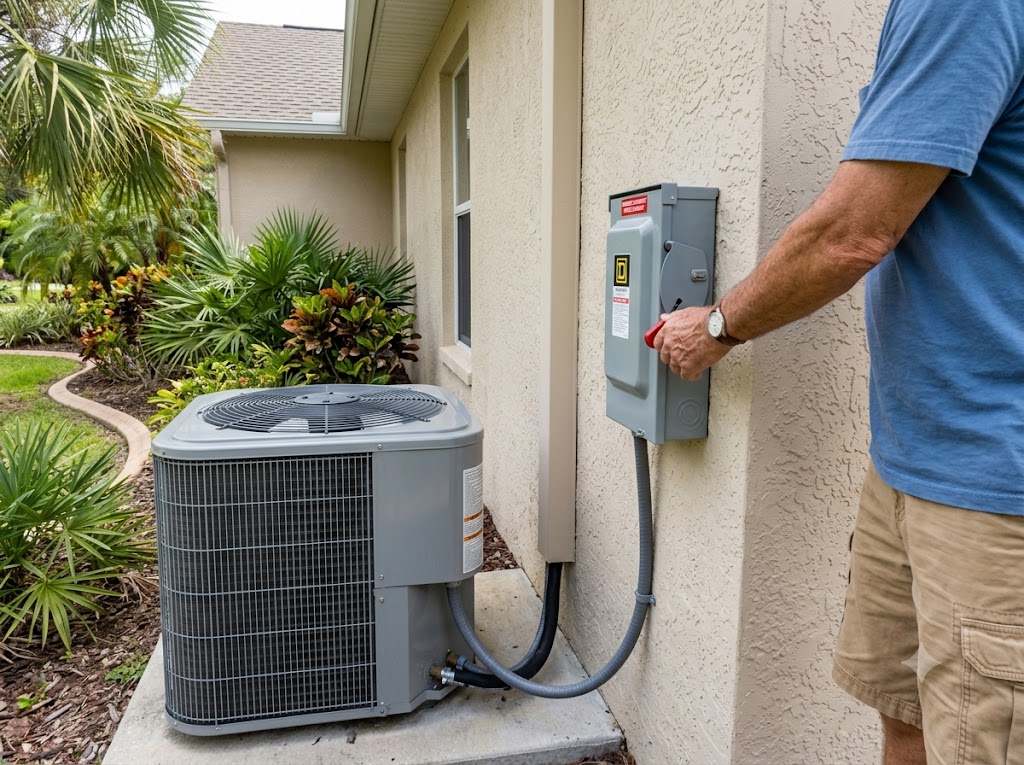
The outdoor disconnect. Every outdoor unit has a small metal box mounted on the wall next to it with a pull-out block or a switch. It occasionally gets bumped, left ajar by a prior repair, or left off deliberately during hurricane prep and never switched back on.
The condensate safety switch. Many systems in Florida have a float switch in the drain pan or line that shuts the whole system down the moment it senses standing water, specifically to prevent a ceiling leak. A clogged drain line can trigger this even when nothing else is wrong.
The air filter. A filter that has not been changed in months can restrict airflow badly enough to freeze the indoor coil. Once that ice builds up, some systems will not restart at all until it thaws and the safety switch resets.
If one of these explains it, the fix costs nothing but a few minutes. If the breaker trips again immediately, or none of the above changes anything, move to the sections below.
The Most Common Reason an Otherwise Healthy Unit Won't Start: A Bad Capacitor
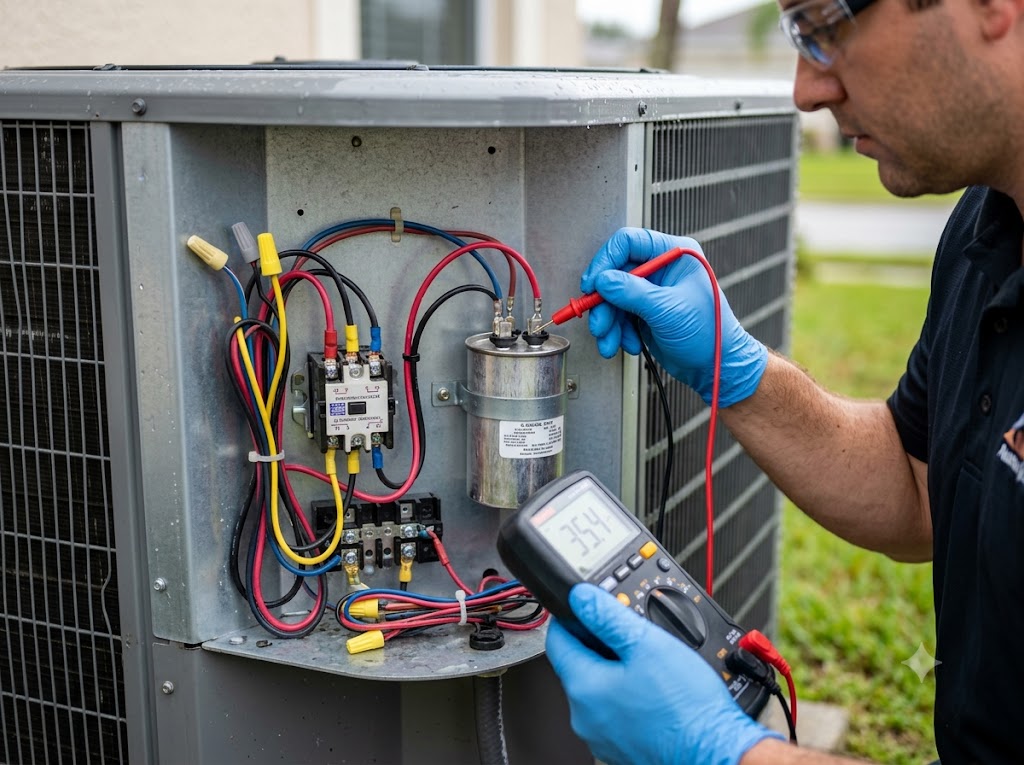
A run capacitor stores a charge and gives the compressor and fan motor the push they need to start spinning. When it weakens or fails, a system can still attempt to power up, and often does, without ever actually starting. That is why this failure sounds different from a dead breaker: instead of complete silence, a homeowner hears a faint hum or a single click from the outdoor unit while the fan blades stay perfectly still, or spin only after being nudged by hand (something we do not recommend doing yourself, since it means reaching into a live electrical cabinet).
A capacitor that is starting to fail can also cause the outdoor unit to feel warm to the touch, since the compressor is drawing current without actually running. Heat, humidity, and the frequent power fluctuations that come with Florida's storm season all shorten a capacitor's working life, which is part of why this is one of the most common single-part failures a technician sees in this market. A capacitor holds an electrical charge even after the system is switched off, which is exactly why testing or replacing one is not a homeowner task.
When It Is the Breaker, Not the AC
A breaker that trips once, especially right after a storm or an outage, is doing its job. Reset it a single time and see what happens. A breaker that trips again the instant it is reset is telling you something different: there is an active short somewhere in the circuit, or a component like the compressor is drawing far more current than it should.
Repeatedly flipping that breaker back on does not fix the underlying problem, and it is not a safe habit. Each reset sends full power back into a circuit that just told you, in the clearest way an electrical system can, that something downstream is wrong. This is the point to stop and call a licensed technician rather than keep testing it.
Signs You're Dealing With a Dead Compressor or Contactor
A contactor is the switch that sends power to the compressor and outdoor fan whenever the thermostat calls for cooling. Contactors are relatively inexpensive to replace and fail more often than most other electrical parts, especially after repeated power surges. A contactor that has failed closed can cause a unit to run constantly and never shut off. One that has failed open can leave the outdoor unit completely dead even though the thermostat and indoor blower work normally, which can look identical to a bad capacitor from the outside.
A failed compressor is a more serious finding and a less common one. Warning signs include a loud humming sound with no attempt to start at all, a breaker that trips specifically when the compressor tries to kick on, or an outdoor unit that has been making increasingly loud or unusual noises for weeks before finally refusing to start. An honest technician will test the compressor's windings directly rather than guessing, and will walk through the repair-versus-replace decision with real numbers about the system's age and condition, not a sales pitch.
What to Do Before You Call
Work through the boring checks first: thermostat mode and batteries, the breaker, the outdoor disconnect, the condensate switch, and the filter. Note exactly what you hear, or do not hear, from the outdoor unit, since "complete silence" and "a hum with no fan movement" point a technician toward two very different repairs before they even arrive. Mention whether a storm or outage happened recently and whether the breaker has tripped once or repeatedly. That handful of details, given plainly during the first phone call, is usually enough for a licensed technician to bring the right part on the first visit instead of a second trip.
Simple Action Air Conditioning services Palm Beach County as one transparent, licensed option among several capable ones in this market. The value we put in front of a call like this is straightforward: an honest read on whether this is a five-minute fix or a real repair, a technician who explains what failed and why before doing anything, and a first visit built to actually solve it rather than open a longer ticket. For a unit that will not start at all, especially after a storm, our emergency AC service and AC repair teams are built for exactly this call. If a storm is approaching, our hurricane prep checklist covers the disconnect steps in more detail, and our guide on spotting a dishonest AC repair quote is worth a read before any technician, including ours, gives you a diagnosis.
Frequently Asked Questions
Why does my AC not turn on after a power outage or storm?
A nearby lightning strike or a grid disturbance during an outage can send a surge through the line feeding the outdoor unit. That surge can trip a breaker, blow a fuse, or damage the run capacitor that gets the compressor and fan motor spinning. The thermostat and indoor blower often keep working because they run on a separate, low-voltage circuit, while the outdoor unit stays silent because the higher-voltage side took the hit.
Why is my outdoor unit not turning on but my thermostat and indoor fan still work?
A home's cooling system actually runs on two separate electrical paths: a low-voltage control circuit that powers the thermostat and signals the system to run, and a higher-voltage circuit, typically 240 volts, that powers the outdoor compressor and fan. When the thermostat and indoor blower work normally but the outdoor unit stays dead, the problem almost always sits on that outdoor circuit specifically: a tripped breaker dedicated to the outdoor unit, a blown fuse, a failed contactor, or a bad capacitor, not a thermostat problem.
Is a hot outdoor unit but no fan a capacitor problem?
That combination points strongly at a capacitor. A weak or failed capacitor can let the compressor attempt to draw power and build heat without ever actually starting, while the fan blades stay still or need help getting started. A seized fan motor or a failed contactor can produce a similar symptom, so a licensed technician should confirm which one it is before any part gets replaced.
How do I know if my AC capacitor is bad?
Common signs include a faint humming or clicking sound from the outdoor unit with no fan movement, a capacitor that looks swollen or bulged on top instead of flat, and visible oily residue around it. A capacitor stores an electrical charge even when the system is off, so testing or replacing one safely requires a technician with the right tools and training rather than a homeowner check.
Should I keep resetting a breaker that keeps tripping my AC?
No. A breaker that trips once after a storm or outage is behaving normally. A breaker that trips again immediately after being reset is signaling an active short or an overloaded component, and repeated resets send full power back into a circuit that has already told you something is wrong. Stop resetting it and call a licensed technician instead.
Can lightning damage my AC even if it doesn't strike my house directly?
Yes. A strike to a nearby tree, a utility pole, or a neighboring property can send a surge through the shared electrical grid and into a home's wiring without ever touching the house itself. This is exactly why the National Weather Service's South Florida office advises turning off air conditioners during a storm rather than waiting to see whether a direct strike happens.
Does homeowners insurance cover AC damage from a lightning strike or power surge?
Often, but the details depend on the policy. According to the Insurance Information Institute, standard homeowners policies generally cover damage caused directly by lightning, including power surges that occur because of a strike. Surges that come from other sources, such as a utility grid disturbance unrelated to lightning, may fall outside a base policy and require optional equipment breakdown coverage. Check the specific terms of your policy or ask your agent, since coverage varies.