How Long Do AC Units Last in Florida?
Vardan Hovhannisyan
Co-Founder

Date & Time
A homeowner two blocks off the water in Palm Beach buys a brand-new system, hears the salesperson say 15 to 20 years, and writes the date on the breaker panel. Nine summers later, the coil gives out and the quote for a replacement lands. The chart was not lying. It was just written for Ohio, not for a house that breathes Atlantic salt every night.
So here is the real question. How long do AC units last in Florida, and how much does living near the coast change the math? We pull a lot of dead systems out of Palm Beach County homes, and the answer is more honest than the brochure number.
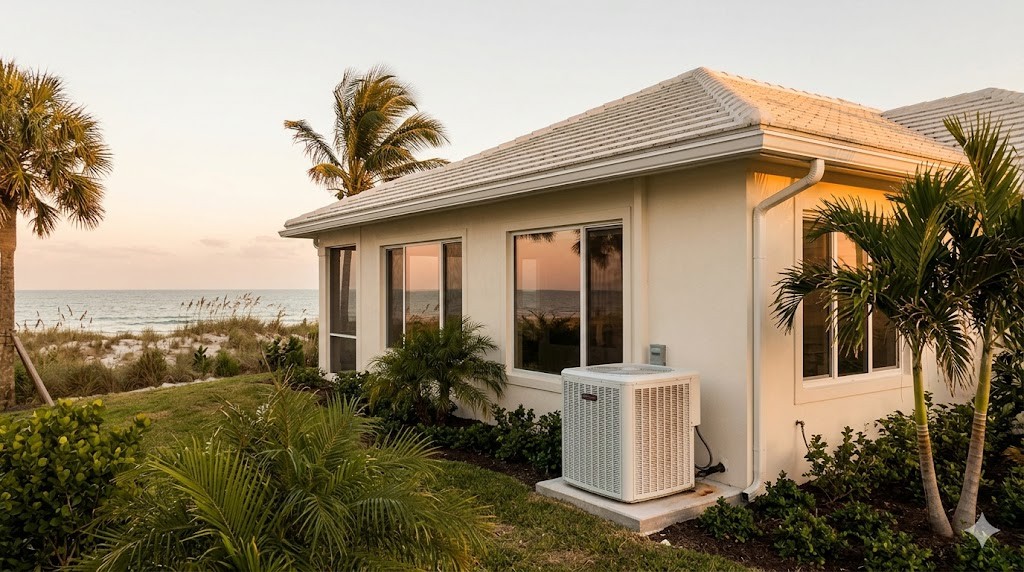
The honest answer: how long AC units last in Florida
Start with the national baseline. A well-kept central air conditioner gets cited at 15 to 20 years of service, and the federal guidance lands near the low end of that. ENERGY STAR tells homeowners to start planning a replacement once an air conditioner passes 10 years old, and a high-efficiency unit installed correctly saves up to 20 percent on heating and cooling costs. The Department of Energy flags systems over 15 years old as ready for an upgrade. Those numbers assume a mild climate and a unit that gets a long winter break.
Florida strips that break away. Our systems run hard from March into November, sometimes longer, so they rack up far more running hours per year than a unit in a four-season state. Push a machine that hard and the honest inland Florida number lands closer to 10 to 15 years, even with good care.
Now move toward the water, and the number drops again. In our field experience across Palm Beach County, coastal systems within a few miles of the Atlantic commonly reach 8 to 12 years before a major failure. Park a condenser within a mile or two of open salt water with no protection routine, and 5 to 7 years happens more often than anyone wants to hear. Same brand, same model, same installer. The only variable that changed is the air.
That gap is the whole point. The brochure number and the coastal number are two different facts, and the distance between them is measured in salt.
Why salt air is the real clock on a coastal system
Your outdoor condenser is a grid of copper tubing wrapped in thin aluminum fins. That coil sheds heat from your home into the outside air, and it lives outdoors twenty-four hours a day. On the coast, the air it breathes carries chloride from sea spray.
Salt is the problem. Marine air carries chloride, and chloride accelerates the corrosion of the copper and aluminum your coil is built from. The closer your home sits to the water, the more salt settles on that metal, and the faster it breaks down. Move a few miles inland and the effect drops off fast. We watch it happen street by street in Palm Beach County. The same model holds up noticeably longer six miles from the beach than it does one block off the water.
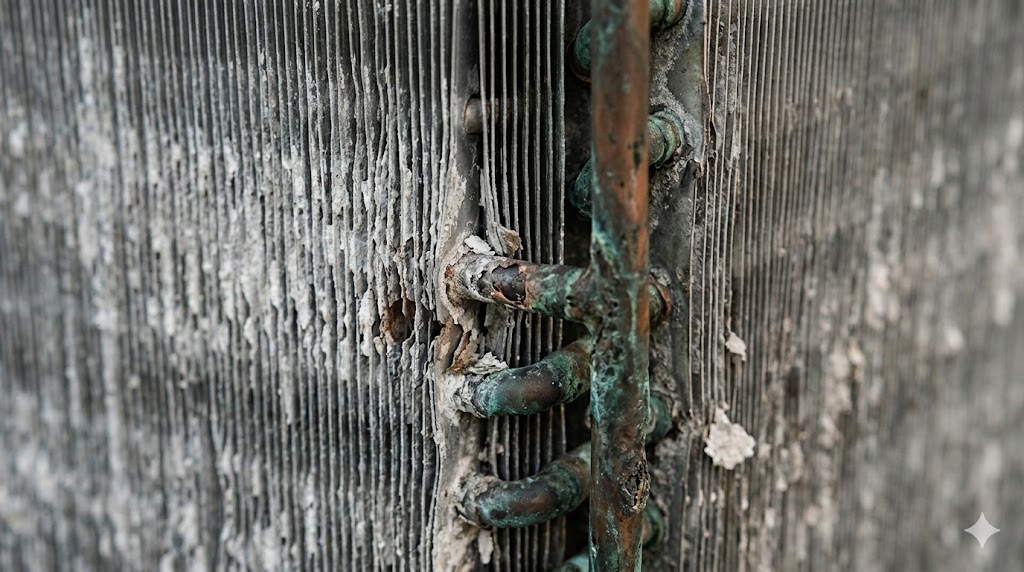
Here is how it plays out on the equipment. Salt settles between the copper tubes and the aluminum fins and sets off galvanic corrosion, the slow electrical reaction between two different metals sitting in a salty film. The fins thin out and crumble. The coil walls pit. Eventually a pinhole opens, refrigerant leaks out, and the system stops cooling. Most coastal coil failures we see are corrosion failures, not bad luck.
This is also why salt air air conditioner corrosion shows up first on the outdoor unit and rarely on the indoor air handler. The salt never reaches the inside coil in the same volume. The condenser takes the hit.
The signs your coastal system is near the end
A system in Ohio tends to die from age and wear. A system on the Palm Beach County coast dies from corrosion, and corrosion leaves fingerprints. Watch for these.
Repeat refrigerant loss. One refrigerant leak is a repair. A second leak on the same outdoor coil within a year or two tells you the coil itself is pitted through. You do not chase leaks on a corroded coil. You replace it.
Visible damage on the outdoor unit. Walk out to your condenser and look at the fins. White powdery buildup, fins that flake apart when you brush them, rust streaks running down the cabinet, these are all signs the salt has been working on the metal for years.
Weak cooling on the hottest afternoons. A corroded, salt-clogged coil cannot shed heat well. The system runs and runs and still loses the fight at 3 p.m. in August. That is the coil suffocating, not the thermostat.
Climbing energy bills with no change in habits. A struggling coastal system burns more electricity to deliver less cooling. When the bill climbs season over season and nothing in the house changed, the equipment is telling you it is tired.
Short cycling. A system that snaps on and off in quick bursts is often fighting restricted airflow or pressure problems tied to a fouled coil. On the coast, salt is a common root cause.
One of these signs on an 8 to 10 year old coastal unit is worth a professional look. Two or more at once usually means the clock has run out. Our AC repair team in Palm Beach County gives an honest read on which it is, and we put the answer in plain language.
What actually adds years on the coast
The good news is that coastal lifespan is not fixed. The homeowners whose systems reach the top of the range, instead of the bottom, almost always do the same handful of things.
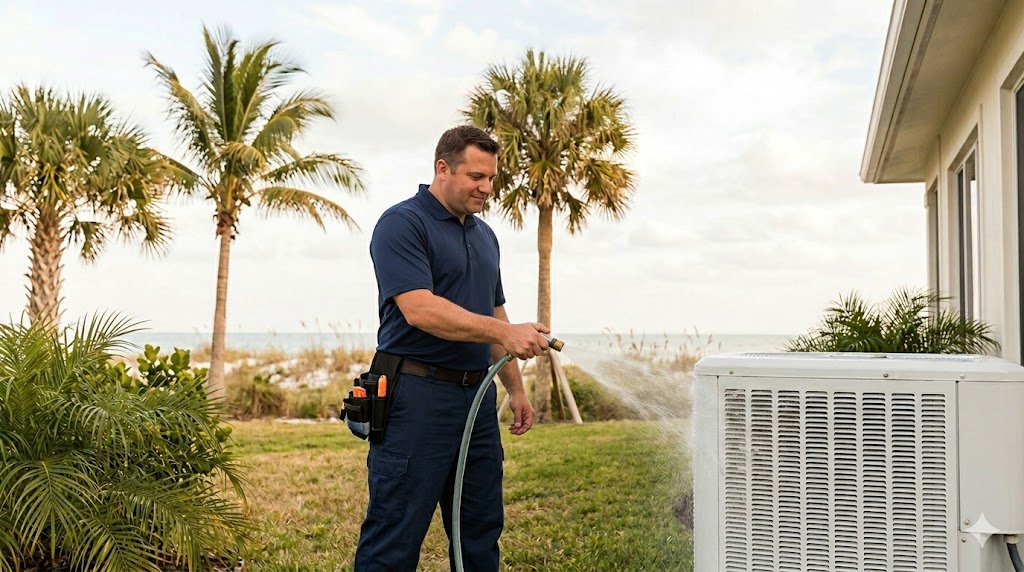
Rinse the outdoor coil with fresh water. This is the single highest-value habit on the coast. A gentle fresh-water rinse washes the salt film off the fins before it sets into corrosion. Homes near the water benefit from a rinse every month or two during the long cooling season. Use a hose, not a pressure washer, and aim across the fins, not into them.
Change the filter on schedule. A clean filter protects the whole system. The U.S. Department of Energy notes that a dirty, clogged filter reduces airflow and lets dirt build up on the coil, which can cause the system to fail prematurely. Replace it every month or two during cooling season, and monthly when the system runs hard.
Book maintenance before each cooling season. A coastal tune-up is not the same as an inland one. A good technician cleans the coil properly, checks refrigerant charge, inspects the fins for early corrosion, and catches a small problem while it is still small. The Department of Energy reports that a regular maintenance schedule cuts heating and cooling costs by 5 to 10 percent and prolongs the life of the equipment. That is exactly what our AC maintenance and tune-up service and the Simple Care Club membership are built around. The point of a plan is steady attention, not a once-every-few-years scramble.
Buy coastal-grade equipment next time. When the day comes to replace, the choice of unit matters more on the coast than anywhere else. Coated coils and corrosion-resistant condenser cabinets cost more up front and earn it back in years of added service life. We walk Palm Beach County homeowners through coastal-grade options during any AC installation and replacement conversation, because installing a standard inland unit two blocks from the ocean is how you end up back here in seven years.
Set the thermostat with the climate in mind too. The Department of Energy notes you can save as much as 10 percent on cooling costs by setting the thermostat back when you are away or asleep, and it points to 78 degrees as the summer target. Less runtime means less strain on a coastal system.
Repair or replace: making the call at years 8 to 10
A coastal system at year eight sits in a gray zone, and this is where Palm Beach County homeowners get taken advantage of. The honest framing is simple. Repair when the failure is a single part on an otherwise healthy system. Replace when the coil itself is corroded through, because a corroded coil is the system.
Run the numbers on time, not just parts. A unit that has needed three service calls in two seasons, runs on older refrigerant, and shows fin corrosion is telling you it wants to retire. Pouring repairs into that system buys months, not years. A homeowner with a five year old unit and one bad capacitor is in the opposite spot. Fix it and move on.
We give that assessment straight, with our upfront pricing promise and no pressure to replace something that has life left. Honesty on repair versus replace is the whole reason a lot of Palm Beach County families call us a second time. If a repair is the right answer, we say so. If the coil is gone, we show you why on the equipment itself.
How Simple Action handles coastal systems
We are an HVAC company that lives and works in this climate, so coastal AC life is not a side topic for us. It is most of the job. We size and install coastal-grade equipment, we build maintenance around salt exposure, and we back the work with a one-year labor warranty, narrow on-time arrival windows, and respect for your home on every visit. The brand promise reduces to one call, one price, one visit.
If your system is creeping toward the back half of its life, or you just want a clear read on where it stands, that is a normal call to make before the next heat wave. For more seasonal guidance, our checklist on how to prepare your AC for a hurricane covers the other big coastal threat, and our Palm Beach County service areas page shows the towns we cover.
Frequently asked questions
How long do AC units last in Florida?
Inland Florida systems commonly last 10 to 15 years because they run far more hours per year than units in cooler states. The national average sits at 15 to 20 years, but heavy Florida runtime pulls the real number down. Near the coast, salt air pulls it down further.
Does salt air really damage air conditioners?
Yes. Marine salt carries chloride, which accelerates corrosion on the copper and aluminum of your outdoor coil. Over time the fins crumble and the coil pits until refrigerant leaks out. It is the leading cause of early condenser failure on coastal homes.
How long does an AC unit last near the ocean?
Within a few miles of the Atlantic, coastal systems in Palm Beach County commonly reach 8 to 12 years. Within a mile or two of open salt water with no protection routine, 5 to 7 years is common. A regular fresh-water rinse and coastal-grade equipment add years back.
How often should I service my AC in coastal Florida?
Book a professional tune-up before each cooling season, so once a year at minimum, and twice a year for homes very close to the water. Between visits, rinse the outdoor coil with fresh water every month or two and change the filter monthly during cooling season.
Is a coastal-grade or coated-coil AC worth it in Florida?
For a home near salt water, yes. Coated coils and corrosion-resistant cabinets resist the salt that kills standard units early. The higher up-front investment buys years of added service life, which makes it the better long-term value over the life of the system.