Why Is My House So Humid With the AC On?
Vardan Hovhannisyan
Co-Founder

Date & Time
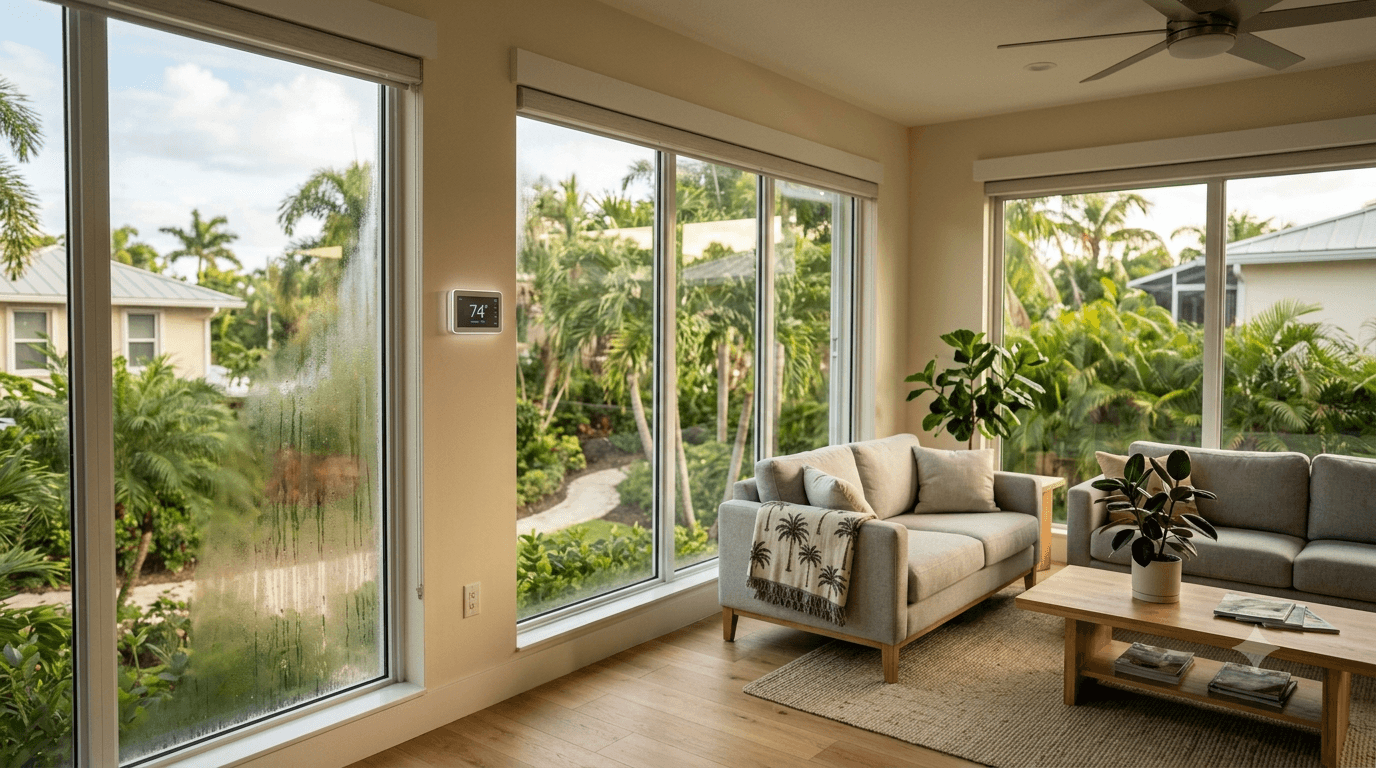
It is 74 degrees on the thermostat, the air handler has been running since lunch, and the house still feels like a damp towel. So you drop the temperature again. An hour later the air feels colder and clammier, not drier. If that sounds familiar, you are not imagining it, and your air conditioner is probably not broken.
A humid house with the AC running is almost never a dead system. It is a moisture problem, and in Palm Beach County moisture is the hardest part of the job. The good news is that you can diagnose most of the causes yourself before you call anyone. Here is what is happening and what to do about it.
First, what "too humid" actually means
Comfort is not just about temperature. It is about how much water is in your air. The EPA recommends keeping indoor relative humidity below 60 percent, and ideally between 30 and 50 percent. Once you climb past 60 percent, the air feels sticky at any temperature, and you give mold the moisture it needs to grow on drywall, baseboards, and the back of furniture.
That last part matters for your health, not just your comfort. The EPA notes that mold can trigger allergic reactions and asthma attacks in sensitive people. So a clammy house is worth taking seriously. Buy a small humidity meter, set it on a shelf, and read the actual number. Knowing if you sit at 55 percent or 68 percent changes everything about the fix.
Why your AC cools the air but leaves it damp
Your air conditioner pulls moisture out of the house as a side effect of cooling. Warm indoor air passes over the cold evaporator coil, water condenses on that coil the same way it beads on a glass of iced tea, and the water drains outside. Cooling and drying happen together.
The catch is that the two jobs are not equal. The U.S. Department of Energy points out that modern air conditioners reduce temperature very well but remove moisture less effectively. In a dry climate that gap never shows. In Palm Beach County, where outdoor air sits heavy with Atlantic moisture for half the year, that gap becomes the whole problem. Your system hits the temperature you asked for and shuts off before it has wrung enough water out of the air. You feel cold and damp, so you lower the thermostat, and the cycle repeats.
The seven reasons a Palm Beach County home stays humid with the AC running
Walk through these in order. Most homes have one or two of them, and the first three you can check in the next ten minutes.
1. The thermostat fan is set to ON instead of AUTO
This is the most common cause, and the easiest to miss. On AUTO, the blower runs only while the system actively cools, so condensed water has time to drip off the coil and drain outside between cycles. On ON, the blower never stops. Air keeps blowing across a wet coil after cooling ends, and it pushes that moisture right back into your rooms before it can drain. Set the fan to AUTO and you often drop several points of humidity by the next day.
2. The system is oversized and short cycling
A unit that is too large for the home cools the rooms in a fast, hard blast, hits the set temperature in a few minutes, and shuts off. Those short bursts never give the coil enough run time to dehumidify. The house gets cold quickly and stays wet. This traces back to how the system was sized at installation, so the fix involves a professional, not a setting. It is one reason an honest load calculation matters more than simply buying the biggest unit a budget allows.
3. The air filter is dirty
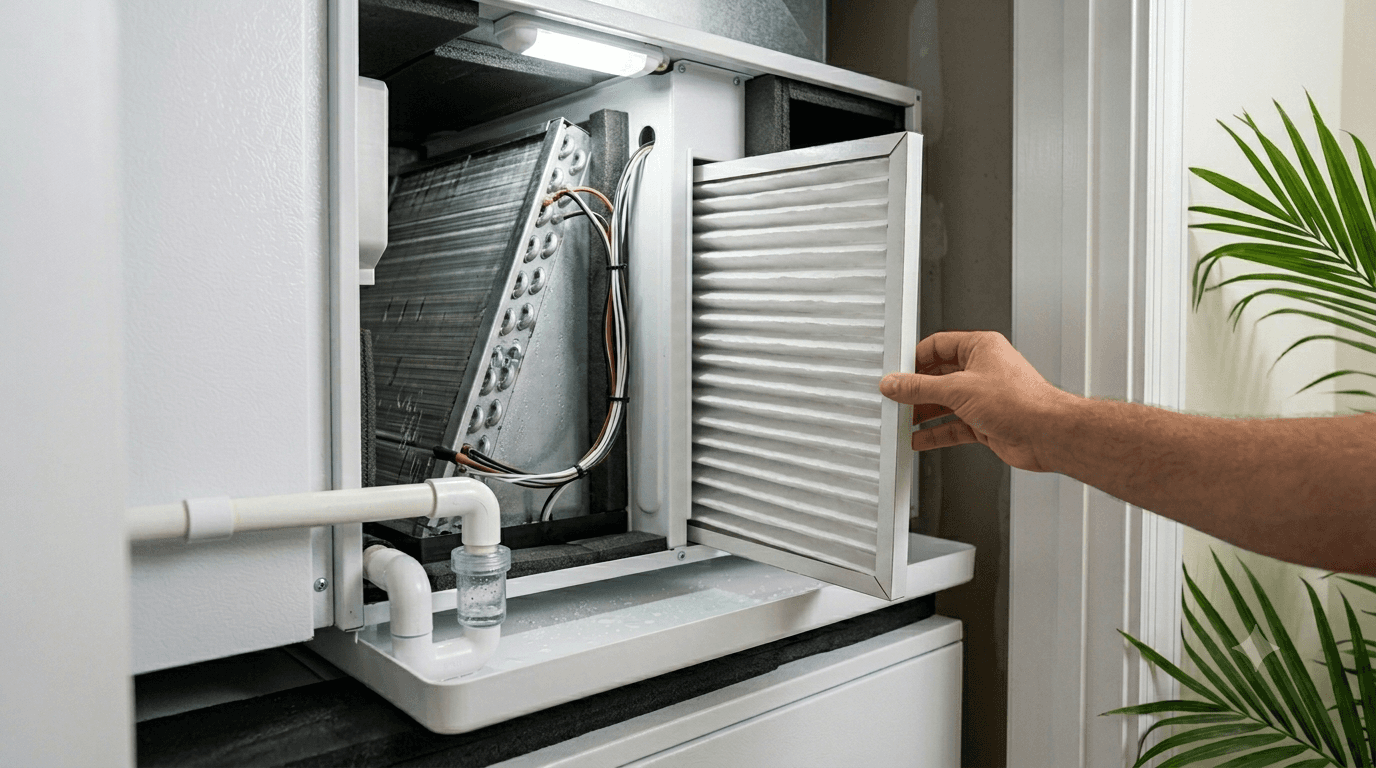
A clogged filter starves the coil of airflow, and weak airflow means weak dehumidification. ENERGY STAR advises homeowners to inspect, clean, or change the air filter once a month. In a coastal home with pets or construction dust, monthly is the right rhythm. This is the simplest and fastest fix on the list, so start here.
4. The condensate drain is clogged or the coil is dirty
The water your AC removes has to go somewhere. The EPA specifically recommends that you keep air conditioning drip pans clean and the drain lines clear and flowing. When the drain line clogs with algae, which happens fast in Florida heat, the pan backs up and the system cannot shed water. A coat of dust and biofilm on the evaporator coil also blocks condensation from forming and draining the way it should. Both call for a maintenance visit.
5. The refrigerant charge is low
Refrigerant is what makes the coil cold enough to condense water. When the charge runs low, usually from a leak, the coil never gets cold enough to dry the air well. The air feels a little cool but stays damp. Low refrigerant points to a repair, and it needs a licensed technician, since refrigerant handling is regulated.
6. Leaky ducts and salt-air infiltration
Hot, humid outdoor air finds its way in through duct gaps in the attic, around old windows, and through doors that get used all day. Near the coast, salt air also corrodes equipment and accelerates wear on coils and cabinets, which drags down dehumidification over time. Sealing ducts and tightening the building envelope keeps the wet air outside where it belongs.
7. The system is simply old and tired
In coastal Palm Beach County, salt exposure shortens AC life to roughly 8 to 12 years, and the homes closest to the water run shorter still. An aging system loses dehumidification ability long before it stops cooling. If your unit is past a decade and the house feels muggy no matter what you do, age is part of the answer. Our guide on how long AC units last in coastal Florida walks through the signs that replacement beats another repair.
What you can fix yourself today
Four of the seven causes are in your hands right now. Set the thermostat fan to AUTO. Pull the air filter and replace it if light does not pass through it. Walk the house and close any windows or sliding doors that get left cracked, since open glass undoes hours of dehumidification in this climate. Then stop chasing comfort with the temperature dial. Setting the thermostat lower does not dry the air faster, it just makes a damp house a cold, damp house. Pick a steady temperature in the mid 70s and let the system run full cycles.
One more habit helps during the wet season. Run bathroom and kitchen exhaust fans while you shower and cook, and vent the clothes dryer outside. Every gallon of moisture you stop at the source is a gallon your AC does not have to remove.
When to call a professional
Call for service when the simple fixes do not move the needle. Book a visit if the house stays above 60 percent humidity after you have set the fan to AUTO and changed the filter, if the air feels cool but never dry, if you see water around the indoor unit or hear it gurgling, or if the system runs in short bursts and shuts off fast. Those point to charge, drainage, coil, or sizing issues that need hands and gauges, not guesswork.
Steady humidity control also comes from staying ahead of these problems. A maintenance visit clears the drain, washes the coil, checks the charge, and confirms airflow before summer loads the system. Our AC maintenance and tune-up service covers exactly that, and for homes fighting persistent dampness, our indoor air quality solutions add dedicated dehumidification that an air conditioner alone was never built to deliver.
How Simple Action handles a humid house in Palm Beach County
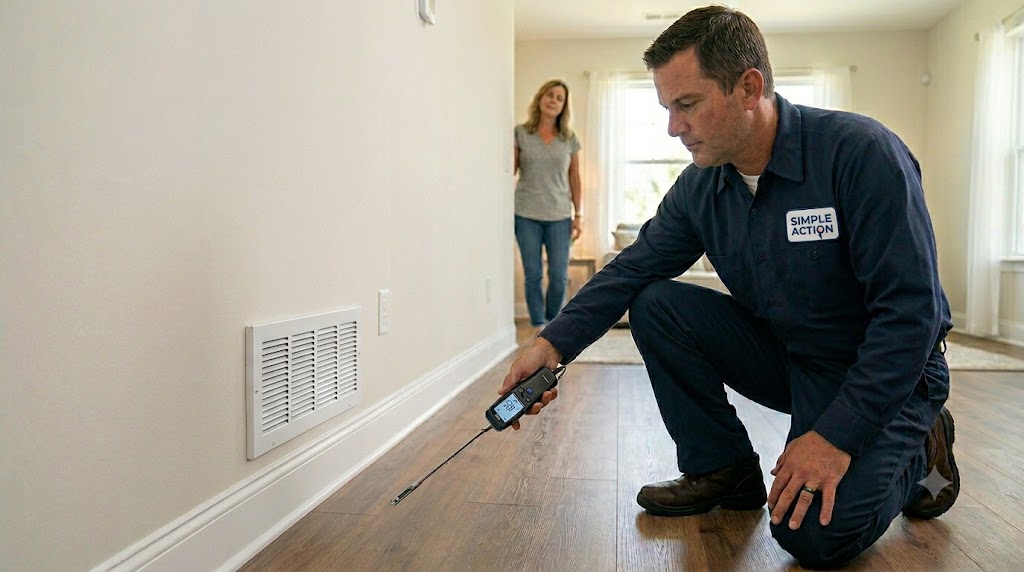
We treat a muggy house as a diagnosis, not a sales pitch. A technician measures your actual humidity, checks the fan setting, filter, drain, coil, and charge, and tells you plainly which fixes are free, which are a repair, and which point to a system near the end of its coastal life. You get an upfront price before any work starts, a narrow arrival window so you are not waiting all day, and honest repair-versus-replace advice instead of a default push to the most expensive option.
Travis and Vardan built Simple Action on one idea: quality work, one simple action at a time. We are licensed, certified, and insured, we answer around the clock, and we serve homeowners across Palm Beach County from Jupiter to Boca Raton. If your house has been clammy all season, we will find out why and fix the cause, not just the symptom.
Frequently asked questions
What humidity level should my Florida home be?
Aim to keep indoor relative humidity below 60 percent, and ideally between 30 and 50 percent. Past 60 percent the air feels sticky and mold gets the moisture it needs to grow. A small humidity meter on a shelf tells you where you actually stand.
Should my AC fan be set to auto or on for humidity?
Set it to AUTO. On AUTO the blower stops between cooling cycles, so water on the coil drains outside. On ON the blower runs nonstop and blows that moisture back into the house before it can drain, which raises indoor humidity.
Can an oversized AC make my house humid?
Yes. A unit that is too big cools the rooms in short bursts and shuts off before it removes much moisture. The house gets cold fast and stays damp. Correct sizing comes from a proper load calculation at installation.
Why is my house humid when the AC air feels cold?
Cold air and dry air are not the same thing. Air conditioners cool more effectively than they dehumidify, so the system can hit your temperature while leaving water in the air. Low refrigerant, a dirty coil, or a fan left on ON all produce cold, damp air.
Will a dehumidifier help if my AC runs all the time?
Often, yes. When an AC runs constantly and the house still sits above 60 percent, a whole-home dehumidifier removes moisture without overcooling the rooms. It works alongside your system and takes the dehumidification load your AC was not designed to carry alone.