AC Short Cycling in Palm Beach County: Causes and Fixes
Vardan Hovhannisyan
Co-Founder

Date & Time
Why Your AC Is Short Cycling (And What It's Doing to Your Palm Beach County Home)
Your air conditioner keeps kicking on, blasting cold air for a few minutes, and shutting off again. The house never really cools down. It stays sticky, the thermostat claims you hit your set temperature, and your FPL bill keeps climbing anyway. That pattern has a name: short cycling. And in Palm Beach County, it almost always points to one of three specific local causes, not a dying compressor.
What Short Cycling Actually Looks Like
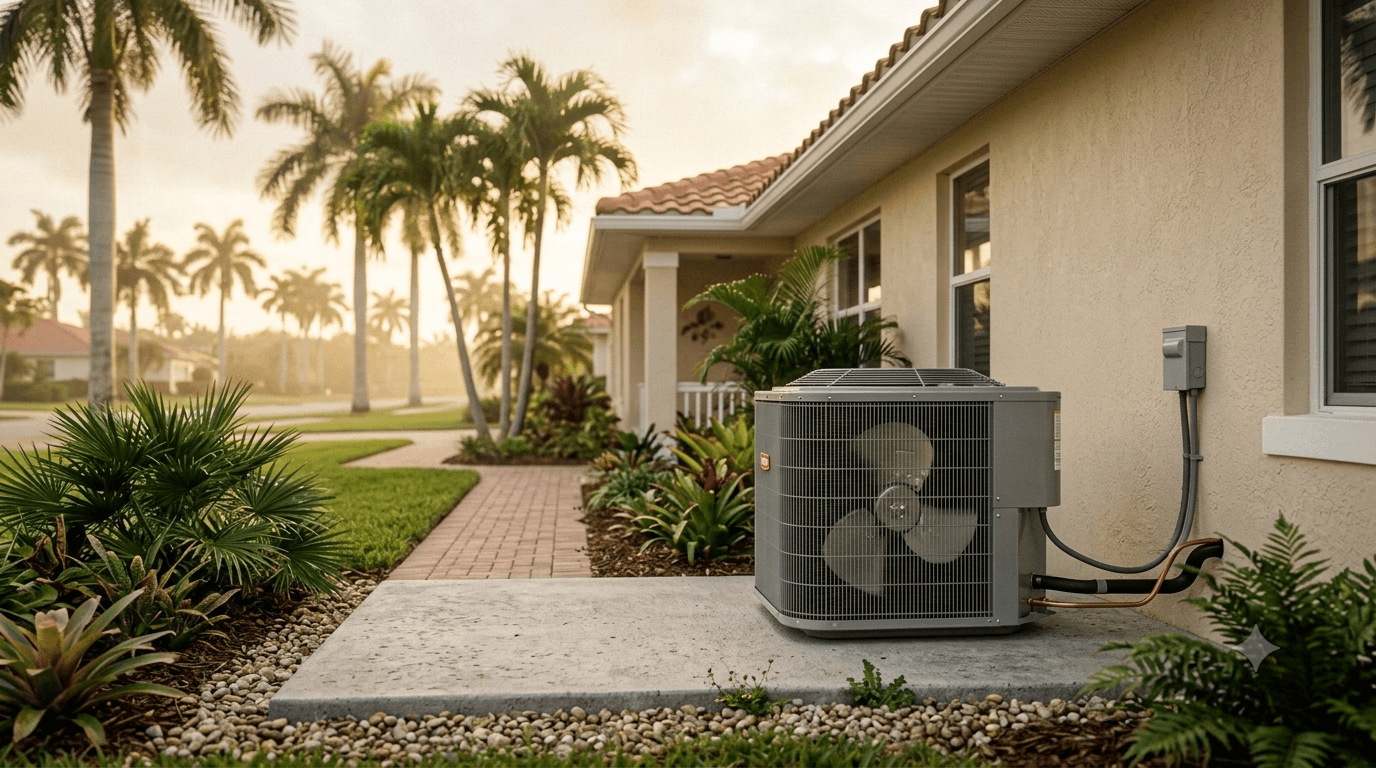
A healthy central AC system runs a cooling cycle for roughly 15 to 20 minutes before shutting off, then rests before starting again, according to Carrier's own guidance on normal AC cycle length, which states plainly that it is "not normal for an AC to cycle every 10 minutes." That run time also matters for efficiency: air conditioners are least efficient the moment they start and climb toward peak efficiency at around the 10-minute mark, according to the U.S. Environmental Protection Agency's ENERGY STAR guidance on right-sized air conditioners. A system that shuts off before it reaches that point is short cycling: running for a few minutes, stopping, and starting again minutes later, over and over.
Signs you're dealing with short cycling in your Palm Beach County home:
The outdoor unit turns on and off every few minutes instead of running a full cycle. Rooms cool quickly at first, then warm back up faster than they should. The thermostat reads "satisfied" while the air still feels damp and heavy. The compressor clicks or hums repeatedly at the outdoor unit. Your FPL bill climbs even though the system seems to be working hard. None of these symptoms tell you the cause on their own. They tell you it's time to look at why.
Why It's More Common in Palm Beach County Homes
Short cycling shows up more often here than in drier, cooler climates, for three reasons tied directly to how this county is built and lived in.
Systems sized for August, running through a humid nine months. A correctly sized system comes from a Manual J load calculation, the residential sizing standard maintained by the Air Conditioning Contractors of America (ACCA), which accounts for square footage, insulation, window placement, and duct losses specific to your house. Too many systems in this market get sized off a rule of thumb built around the hottest week of August instead. A system sized that way blasts through Palm Beach County's long humid stretch in minutes, satisfying the thermostat's temperature reading before it runs long enough to pull the humidity out of the air. ENERGY STAR's own research confirms the mechanism directly: oversized units "short-cycle," and short operation times "do not allow the system to effectively remove humidity, with serious repercussions on both home comfort and durability."
Salt-air corrosion on coastal and near-coastal equipment. If your home sits within about two miles of the coastline, in Palm Beach, Jupiter's coastal stretch, Boca Raton's beach corridor, or similar areas, your outdoor unit is exposed to airborne salt that accelerates corrosion on electrical components. Carrier's own coastal equipment guidance states plainly that homes within two miles of a coastline expose HVAC systems to "corrosive elements that can degrade performance and shorten how long your HVAC system lasts," which is why manufacturers sell dedicated coastal-rated equipment with reinforced coatings for exactly this environment. Corroded contactors and capacitors are a direct short-cycling trigger. Homes further inland, in Wellington, Loxahatchee, and western stretches of Boynton Beach and Delray Beach, see far less of this specific cause.
Snowbird thermostat swings. A home left with the thermostat set high for months, then dropped to 72 degrees the day the owners arrive, hands the system a demand swing it wasn't running against all summer. That sudden load, combined with a system that's already fighting humidity it wasn't designed for, is a common trigger for short cycling right when a seasonal homeowner first turns the AC back on.
The Quick Checks You Can Do Before Calling Anyone
Some causes of short cycling take five minutes to rule out and cost nothing to check.
The filter. Florida's humidity and pollen load clog a filter faster than drier climates do. A filter that's overdue restricts airflow, causes the coil to run cold, and can trigger the exact short-cycle pattern described above. Check it monthly during cooling season instead of waiting the standard 90 days.
The outdoor unit. After a storm, or after a summer of fast landscaping growth, plants, mulch, or debris around the condenser block airflow and force the system to work harder than it should, which can trip it into short cycling. Clear at least two feet of space around the unit.
Thermostat placement. A thermostat mounted in direct sun, near a supply vent, or close to a heat-generating appliance reads the wrong temperature and cycles the system incorrectly. This isn't a broken component. It's a placement problem, and it's an easy one to rule out.
An iced-over indoor coil. If you can see frost or ice on the indoor coil or refrigerant lines, turn the system off and let it thaw completely before running it again. Restarting an iced system repeatedly makes the underlying problem worse. Icing usually ties back to the same airflow and oversizing issues covered above rather than standing alone as its own mystery cause.
If none of these quick checks change anything, the cause is a repair-level issue, not a filter or a plant.
When It's Actually a Repair
A failing capacitor or contactor. The capacitor delivers the electrical jolt the compressor and fan motor need to start. When it drifts out of tolerance, the motor struggles to start, draws excess current, and the system shuts itself down early to protect the compressor. As covered above, coastal salt air shortens the working life of capacitors and contactors specifically, which is why this failure shows up more often in Palm Beach's coastal and near-coastal homes.
Low refrigerant. A system running low on refrigerant, from a leak in the line set or the coil, can trip a safety switch and shut down before completing a cycle. This is a repair a licensed technician diagnoses with gauges, not a guess.
A faulty thermostat sensor. When the internal sensor reads the wrong temperature, it can tell the system to shut off long before the space is actually cool, producing the same short-cycle pattern as an oversized unit even though the equipment itself is fine.
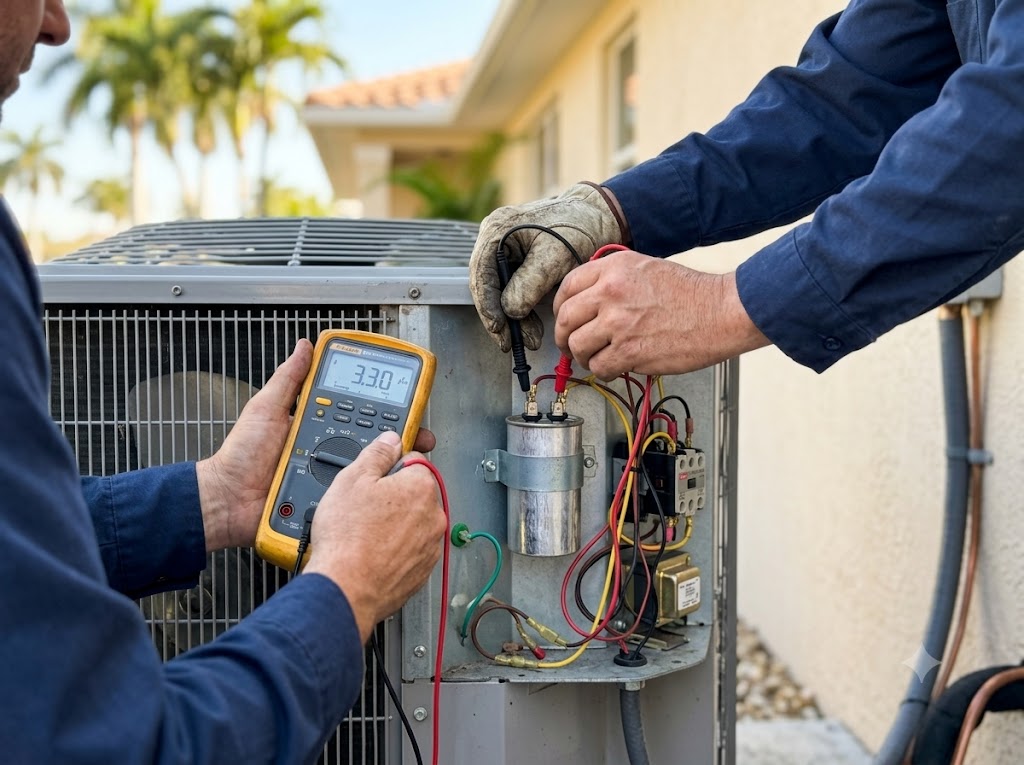
A proper diagnostic visit checks electrical readings at the capacitor and contactor, refrigerant charge and pressures, and the thermostat's actual reading against a separate reference. That's how a technician tells you which of these three is happening instead of replacing parts until something works.
When It's a Sign the System Itself Is the Problem
Some short cycling isn't a single failed part. It's the system telling you it's the wrong system, or it's reached the end of its working life.
Persistent oversizing that a Manual J calculation would catch shortens compressor life across the board, not just on hot days. A system nearing the end of its typical service life develops more frequent electrical and mechanical faults, and short cycling is often the first symptom that shows up before a bigger failure. Repeated capacitor or contactor failures within a short span, needing the same part replaced more than once in a year or two, point to a system-level cause rather than one bad component.
An honest technician tells you which situation you're in and explains the repair-versus-replacement tradeoff in plain terms: how old the system is, how often it's failed, and whether the underlying sizing problem will keep causing the same issue after a repair. That conversation should happen without pressure toward either option.
What Happens If You Ignore It
Short cycling that gets ignored doesn't stay a minor annoyance.
Compressor wear. Every start puts more electrical and mechanical stress on the compressor than a full run cycle does. ENERGY STAR's research is direct on this point: short-cycling "increases wear and tear," and systems that short-cycle regularly develop maintenance problems faster than right-sized systems that run full cycles.
Rising indoor humidity and mold risk. A short cycle doesn't run long enough for moisture to fully condense on the coil and drain away. Some of that moisture evaporates back into the air instead. Over time, indoor humidity climbs above the range the EPA recommends for mold prevention, which sets 60 percent relative humidity as a moisture problem and recommends keeping indoor humidity between 30 and 50 percent. Humid, sticky air isn't just uncomfortable in a Florida home. It's the exact condition mold needs.
Higher FPL bills for worse comfort. Short cycling raises energy use while comfort actually gets worse, since the system spends more time restarting at low efficiency than running at peak efficiency. Homeowners often blame the utility company or the weather before they blame the unit.
Bad timing. Ignoring short cycling deep into the Atlantic hurricane season, which the National Hurricane Center confirms runs from June 1 through November 30, raises the odds of a full system failure right when a functioning AC matters most for a closed-up, storm-prepped home. For snowbird homes left empty over the summer, a short-cycling system that nobody catches early can wear itself into a full shutdown with no one there to notice until they walk back in the door.
How Simple Action Diagnoses and Fixes Short Cycling
Simple Action Air Conditioning is a licensed (CAC1824605), certified, and insured HVAC company serving Palm Beach County, and short cycling is one of the most common diagnostic calls we run. A technician checks the filter, airflow, electrical components, refrigerant charge, and thermostat accuracy in one visit, so you get an answer instead of a guess.
Every visit runs on the same terms: an upfront pricing promise before any work starts, a narrow on-time arrival window, a focus on resolving the issue on the first visit, and a satisfaction guarantee behind the work. If the honest answer is a repair, that's what gets recommended. If the honest answer is that the system itself is the problem, that gets explained plainly too, without pressure either way.
Related reading: Why Is My AC Not Blowing Cold Air?, Why Is My Electric Bill So High in Summer?, and How to Prepare Your AC for a Hurricane. For repair, maintenance, or emergency service, see our AC Repair, AC Maintenance and Tune-Ups, and Emergency AC Service pages.
Frequently Asked Questions
How do I stop my AC from short cycling?
Start with the quick checks: change the filter monthly, keep the thermostat away from direct sun or heat sources, and clear debris from around the outdoor unit. Schedule an annual tune-up to catch electrical wear before it causes a failure. If those steps don't fix it, the cause is a repair-level issue, such as a failing capacitor or a system that's the wrong size for your home, and it needs a licensed technician to diagnose.
What causes an AC compressor to short cycle?
The most common causes are low refrigerant, a failing capacitor or contactor, an iced coil from restricted airflow, or an oversized compressor that satisfies the thermostat's temperature reading before completing a full cooling and dehumidifying cycle.
Will a bad capacitor cause an AC to short cycle?
Yes. A worn capacitor can't deliver the electrical jolt the compressor needs to start cleanly, causing hard starts, humming, clicking, and early shutdowns that repeat every few minutes. In Palm Beach County's coastal and near-coastal homes, salt air ages capacitors faster than it does in inland areas.
Is short cycling bad for my air conditioner?
Yes. Frequent starts put more electrical and mechanical stress on the compressor than full run cycles do, and short cycling raises energy use while leaving indoor humidity higher than it should be. Left alone, it shortens the life of the compressor and other components.
How long should an AC cycle actually run in Florida?
A properly sized system runs roughly 15 to 20 minutes per cycle on a typical summer day, cycling on and off a handful of times per hour. Anything consistently shorter than about 10 minutes is short cycling.
How much does it cost to fix a short cycling AC?
The cost depends on the cause: a diagnostic visit alone, a capacitor or contactor repair, or a system-level replacement if the underlying issue is persistent oversizing or an aging system. Simple Action doesn't publish blanket prices because the right fix depends on what's actually wrong with your system, but every visit comes with an upfront pricing promise before any work begins, a no-surprise diagnostic process, and a satisfaction guarantee behind the work performed.