Why Is My Electric Bill So High in Summer? (Palm Beach)
Vardan Hovhannisyan
Co-Founder

Date & Time
The bill landed and your stomach dropped. Nothing about your routine changed, but the number climbed anyway. You are not imagining it, and you are not alone. In Palm Beach County, a summer electric spike almost always traces back to one thing working overtime: your air conditioner. The good news is that most of the reasons behind a high bill are fixable, and a few of them cost you nothing to correct today.
Here is how a technician thinks about your bill, in the order we actually check things. Start at the top, and by the end you will know what is normal Florida heat, what is a quick fix, and when a high bill is telling you the system itself is the problem.
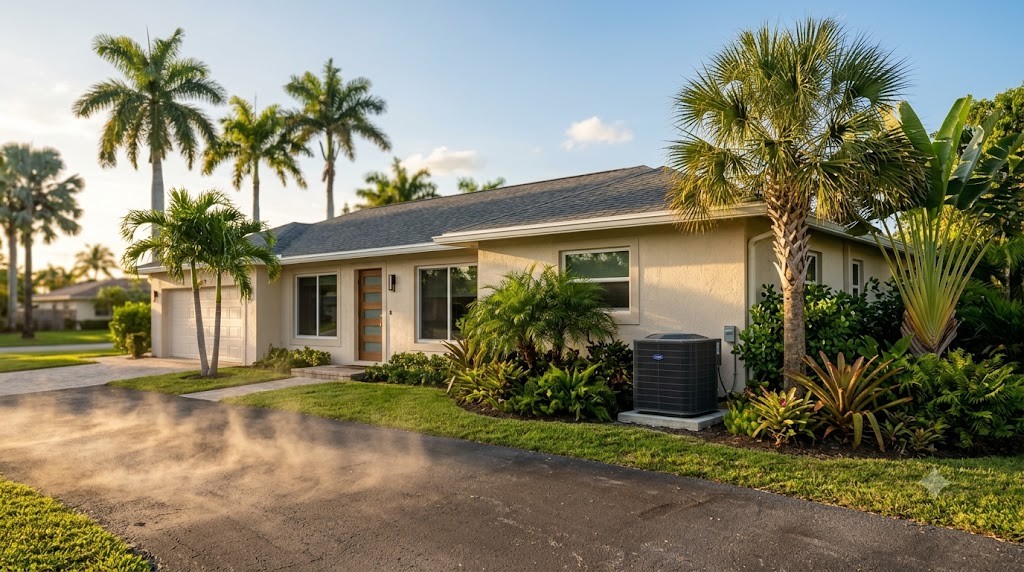
Summer heat pushes Palm Beach County cooling systems to run nearly nonstop, and that shows up on the bill.
First, what a normal summer bill looks like here
Before you assume something broke, set your expectations to Florida. Cooling is the single largest thing your home spends electricity on. Florida Power and Light puts it plainly: cooling makes up roughly 60 percent of your bill. In a climate where the air conditioner runs hard from spring into late fall, that share dominates everything else you plug in.
So a summer bill that runs 30 to 50 percent higher than your winter bill is normal for a Palm Beach County household. The heat sits on us for months, not weeks, and your system answers by running longer cycles day and night. A bill that climbs with the temperature is your air conditioner doing its job.
A bill that doubles or triples is a different story. That size of jump points to a real cause, and it deserves a look. Before you blame the equipment, rule out the simple things: a longer billing cycle that captured a few extra days, a new appliance, more people home for the summer, or a rate change from the utility. Once those are off the table, the trail leads back to the cooling system, and that is where the fixable money hides.
Your thermostat setting is the smallest lever, not the biggest
Every generic article opens by telling you to raise the thermostat. It helps, so start there, but understand that it is the smallest lever you have. The U.S. Department of Energy notes you save as much as 10 percent a year by setting your thermostat back 7 to 10 degrees for 8 hours a day. FPL gets more specific for our climate: each degree you raise the thermostat between 75 and 78 degrees saves 3 to 5 percent on cooling. Set it to 78 degrees when you are home and 82 degrees when you are out, and you bank real savings.
One myth worth killing: cranking the thermostat down to 68 degrees does not cool your home any faster. The Department of Energy is direct that setting a colder-than-normal temperature only leads to excessive cooling and unnecessary expense. Your system runs at one speed. A lower number just means it runs longer to reach a temperature you never needed.
If you want the full breakdown on setpoints for our humidity, we cover it in our guide to the best temperature to set your AC in summer. But if the thermostat is already reasonable and the bill is still high, keep reading, because the thermostat is rarely the real culprit.
The hidden bill drivers a technician checks first
This is where the money actually is. When your air conditioner has to work harder to move the same cool air, it runs longer, and every extra minute of runtime lands on your bill. Five things force that extra runtime, and a technician checks them in roughly this order.
A dirty air filter. This is the most common cause and the easiest to fix. A clogged filter starves the system of airflow, so it runs longer to reach the setpoint and strains the whole time. FPL recommends you clean or replace your filter every month to keep the unit running efficiently. Change it today and you have already done something.
A dirty evaporator or condenser coil. Coils shed heat. When dust coats the indoor coil or the outdoor coil gets choked with grass clippings and salt film, the system loses its ability to release heat and runs far longer to compensate. In our coastal air, outdoor coils foul faster than they do inland.
Low refrigerant. A system low on refrigerant cannot absorb heat properly, so it runs almost constantly and never quite satisfies the thermostat. Low refrigerant means a leak, not a system that simply used it up, and it needs a licensed technician to find and seal the leak, not just a recharge.
Leaky ducts. This one shocks homeowners. ENERGY STAR reports that in a typical house, about 20 to 30 percent of the air moving through the duct system is lost to leaks, holes, and poor connections. In a Palm Beach County home with ductwork running through a blazing hot attic, that means you pay to cool air that leaks out before it ever reaches a room. The Department of Energy confirms that ducts leaking into unconditioned spaces drive up cooling bills and make rooms hard to keep comfortable no matter where you set the thermostat.
Blocked or closed vents. Furniture over a return, closed registers in spare rooms, a tangled flex duct behind the air handler. Each one throttles airflow and adds runtime. Airflow is the whole game, and small blockages add up.
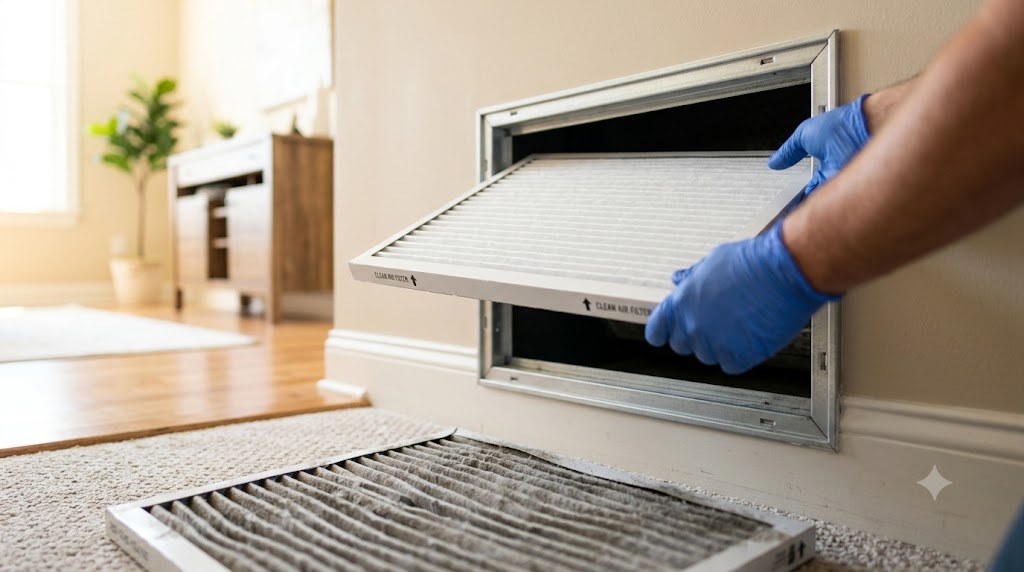
A clogged filter is the most common and easiest to fix cause of a high summer bill. Check yours first.
Humidity is the Palm Beach County multiplier
Dry heat and wet heat are not the same problem. Your air conditioner does two jobs at once here: it lowers the temperature and it wrings moisture out of the air. In our humidity, the moisture job takes a large chunk of the runtime, which is a big reason Florida bills run higher than the same house would cost in a drier state.
Humidity also exposes a sizing problem. An oversized system cools the air fast, shuts off, and never runs long enough to pull the moisture out. The house feels cold and clammy, the system short cycles, and both the comfort and the efficiency suffer. If your home feels humid even with the AC running, that points to a real fault worth diagnosing, and we walk through it in our guide to why a house stays humid with the AC on.
Then there is salt air. Homes within a mile or two of the water fight constant coil corrosion, and a corroded coil loses efficiency long before it fails outright. A coastal system that lost a step quietly asks for more electricity to deliver the same cooling. Coastal-grade equipment and regular cleaning hold that line, which matters more here than almost anywhere else in the country.
When a high bill means the system is near the end
Sometimes the bill is not a symptom of a bad filter. It is a message that the equipment has aged out. Efficiency standards have climbed, and an air conditioner installed 12 or 15 years ago simply uses more electricity to do what a modern system does with less. FPL suggests you consider an energy-efficient upgrade once your air conditioner passes 10 years old or starts needing frequent repairs.
Age alone does not decide it. A system that runs 8 to 10 years in our salt air, climbs on the bill every summer, and stacks up repair calls is telling you something a single fix will not solve. That is the moment for an honest repair-versus-replace conversation, and honest is the operative word. Plenty of homeowners here have been pushed toward a replacement they did not need, so the right answer starts with a real assessment of your system, your home, and how long you plan to stay in it. We break down realistic system life in our piece on how long AC units last in coastal Florida.
When replacement is the right call, the math gets friendlier than most people expect. FPL rebates help offset an efficient upgrade, federal tax credits apply to qualifying high-efficiency systems, and financing spreads the cost over time. A newer high-efficiency system that meets current SEER2 standards runs less and costs less to run, month after month.

A yearly tune-up cleans the coils and checks the refrigerant charge, the highest-value habit for keeping your bill in line.
A simple summer plan to bring the bill down
Put it together, and you get a short list that works. Do the free items today, schedule the rest, and watch the next bill.
Change your filter this week, then set a monthly reminder. Set the thermostat to 78 degrees at home and 82 degrees away, and stop cranking it lower to cool faster. Open your supply vents and clear furniture off your returns. Close blinds on the sunny side of the house during the day, and run ceiling fans counterclockwise so you feel cooler at a higher setpoint. If you keep a pool, run the pump during off-peak hours instead of midday. Seal the obvious gaps around doors and windows so your cool air stays inside.
Then handle the parts that need a technician: a professional tune-up that cleans the coils and checks the refrigerant charge, a duct inspection to catch the leaks you cannot see, and a smart thermostat that trims runtime around your schedule. A yearly tune-up is the highest-value habit you have, and we explain the timing in our guide to how often you should service your AC in Florida. You can book a visit any time through our AC maintenance and tune-up service.
At Simple Action, our promise on a call like this is straightforward: an upfront price before any work starts, a narrow arrival window so you are not stuck waiting all day, and an honest read on whether you need a repair or a replacement. We are licensed, certified, and insured under Florida contractor license CAC1824605, we back our labor with a one-year warranty, and we are available 24/7 when the heat will not wait. Quality work, one simple action at a time. If your summer bill jumped and you want a real answer, reach out and we will take a look.
Frequently asked questions
Why is my electric bill so high all of a sudden in summer?
A sudden summer jump usually comes from your air conditioner running longer than it should. The most common causes are a clogged filter, dirty coils, low refrigerant, or leaky ducts, all of which force extra runtime. Before you blame the equipment, rule out a longer billing cycle, a new appliance, or more people home for the season. If the bill doubled, have a technician check the system.
Does my AC use the most electricity in my house?
In Palm Beach County, yes. Cooling makes up roughly 60 percent of a typical FPL bill, far more than any other use in the home. That is why a small efficiency problem in your air conditioner shows up as a large number on the bill, and why cooling is the first place to look when costs climb.
What temperature should I set my AC to in the summer in Florida?
Set it to 78 degrees when you are home and 82 degrees when you are away. Each degree you raise the thermostat between 75 and 78 degrees saves 3 to 5 percent on cooling, and the higher away setting saves more while you are out. Setting it far colder does not cool your home any faster. It only runs the system longer.
Can a dirty air filter really raise my electric bill?
Yes, and it is the easiest problem to fix. A clogged filter restricts airflow, so your system runs longer to reach the setpoint and strains the entire time. Changing the filter every month keeps airflow strong and runtime shorter. It is the single easiest thing you can do to protect both your bill and your equipment.
Should I leave my AC on all day or turn it off when I leave in summer?
In our humidity, do not shut it off completely. Raise the setpoint to 82 degrees while you are out instead. That keeps the system from working against a hot, moisture-loaded house when you return, and it keeps humidity in check so mold does not get a foothold. A programmable or smart thermostat handles the schedule for you automatically.